Dog Weight Management: Secrets, Science, and the Power of the Dog Weight Calculator
As dog owners, we often equate food with love. That extra treat, the scrap of steak from the dinner table, or the overflowing bowl of kibble feels like a gesture of affection. However, science tells a different, more sobering story. Recent veterinary studies suggest that nearly 60% of dogs in developed nations are overweight or obese. Even more startling is the fact that a dog kept at an ideal weight can live up to 2.5 years longer than an overweight counterpart.
Managing your dog’s weight isn’t just about aesthetics; it is the single most effective way to extend their life and improve their quality of life. This comprehensive guide explores everything you need to know about using a dog weight calculator, understanding breed-specific growth, and the viral health hacks that keep your canine companion thriving.
Why a Dog Weight Calculator is Your Best Friend’s Best Friend
A dog weight calculator is more than just a digital tool; it is a roadmap for your pet’s developmental health. Whether you are trying to predict how large a puppy will get or determining if your senior dog has packed on too many “quarantine pounds,” these tools provide data-driven insights.
1. Predicting Puppy Growth
For new puppy parents, the most common question is: “How big will they get?” A puppy weight calculator uses your dog’s current age (in weeks) and their current weight to estimate their adult size.
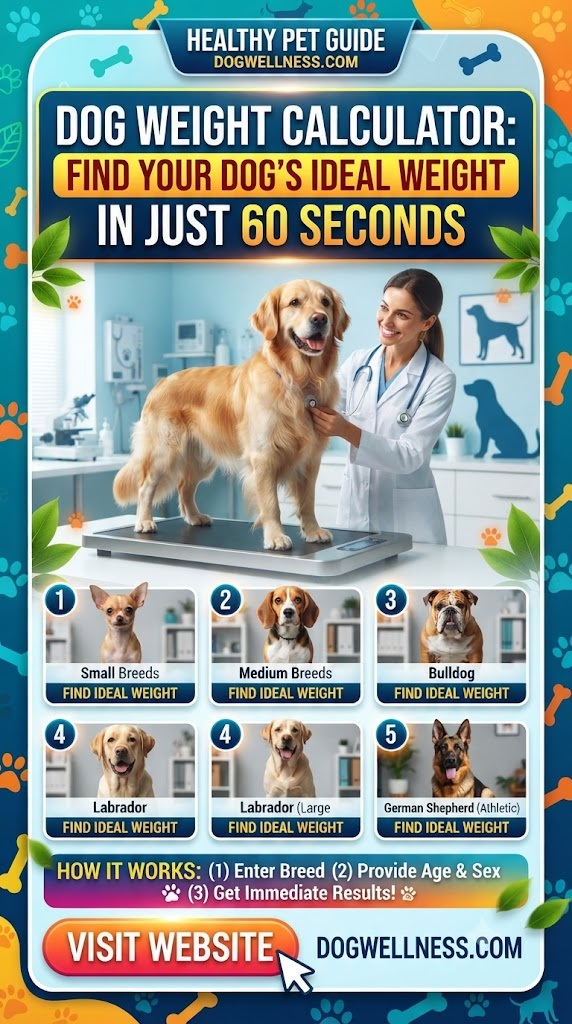
- Small Breeds: Usually reach their full adult weight between 8 and 12 months.
- Medium Breeds: Typically finish growing between 12 and 15 months.
- Large and Giant Breeds: Can continue to fill out and gain bone density until they are 24 months old.
2. Monitoring Adult Maintenance
Once a dog reaches maturity, the calculator shifts from a “predictor” to a “monitor.” It helps you calculate the Resting Energy Requirement (RER). This is the number of calories your dog needs just to perform basic functions like breathing and digestion.
The Viral “Rib Test”: How to Tell if Your Dog is Overweight Instantly
In the world of social media pet health, the “Rib Test” has gone viral for its simplicity and accuracy. You don’t always need a scale to know if your dog is heading toward obesity.
How to Perform the Rib Test:
- The Knuckles Test: Make a fist. Run your fingers over your knuckles. This is what an underweight dog’s ribs feel like (too prominent).
- The Finger Test: Flatten your hand. Run your fingers over the back of your hand. This is what an ideal weight dog’s ribs should feel like—discernible under a thin layer of fat but easy to count.
- The Palm Test: Feel the palm of your hand. If your dog’s ribs feel like this, they are likely overweight or obese, as the ribs are buried under too much tissue.
The Body Condition Score (BCS): The Professional Standard
Veterinarians don’t just look at the number on the scale; they use a Body Condition Score, usually on a scale of 1 to 9.
- Score 1-3 (Underweight): Ribs, lumbar vertebrae, and pelvic bones are easily visible. No palpable fat.
- Score 4-5 (Ideal): The “Hourglass Figure.” When looking from above, the dog should have a visible waist. From the side, the abdomen should be tucked up.
- Score 6-9 (Overweight to Obese): The waist is absent or bulging. Significant fat deposits over the spine and base of the tail.
Breed-Specific Weight Nuances: Why One Size Doesn’t Fit All
One of the biggest mistakes owners make is comparing their dog to another breed. A healthy Greyhound looks “starved” to a Bulldog owner, while a fit English Bulldog might look “overweight” to a Greyhound enthusiast.
The Labrador Trap
Labradors are genetically predisposed to obesity. Scientists have discovered that many Labs possess a mutation in the POMC gene, which is responsible for turning off hunger signals. To a Lab, they are always starving. If you own a Lab, a weight calculator and strict portion control are non-negotiable.
The Great Dane Growth Curve
Giant breeds require “slow and steady” growth. If a Great Dane puppy grows too fast due to over-nutrition, they are at an extremely high risk for developmental orthopedic diseases like hip dysplasia and OCD (Osteochondritis Dissecans). Using a puppy weight calculator for giant breeds helps ensure they aren’t hitting milestones too early.
The Sighthound Standard
Breeds like Whippets, Salukis, and Greyhounds are naturally lean. For these dogs, seeing the faint outline of the last two ribs is actually a sign of peak fitness, not malnutrition.
The Silent Killers: The Dangers of “Just a Few Extra Pounds”
It’s easy to dismiss a two-pound weight gain in a medium-sized dog, but consider the percentage. For a 20-pound Beagle, a 2-pound gain is a 10% increase in body weight. For a human weighing 150 pounds, that’s the equivalent of gaining 15 pounds in a short period.
1. Chronic Inflammation
Adipose tissue (fat) is not just stored energy; it is biologically active endocrine tissue. It secretes inflammatory hormones into the bloodstream, putting constant stress on every organ in the body.
2. Joint Degeneration and Arthritis
Extra weight puts mechanical stress on joints. Over time, this leads to the breakdown of cartilage and the onset of painful arthritis. This creates a vicious cycle: the dog is in pain, so it moves less, which causes it to gain more weight.
3. Diabetes and Metabolic Disorders
While less common than in cats, obesity in dogs can lead to insulin resistance and secondary metabolic issues that require lifelong medication and expensive veterinary care.
Viral Content Ideas for Dog Owners: Boosting Engagement through Health
If you are a content creator in the pet niche, weight management is a goldmine for high-CTR (Click-Through Rate) topics. Here are several viral ideas to leverage:
- “The 2.5-Year Secret”: An article or video focusing on how keeping a dog lean adds years to their life.
- “Dog Food Bag Lies”: Most dog food bags suggest feeding portions that are too large for the average sedentary house dog. Teaching owners how to calculate actual caloric needs is a “disruptive” and highly shareable topic.
- “The Hidden Calorie Guide”: Did you know a single cube of cheddar cheese for a 20-lb dog is the caloric equivalent of a human eating two double cheeseburgers? These “Visual Comparison” posts perform exceptionally well on platforms like Instagram and TikTok.
- “Before and After: The De-Chonking Journey”: Everyone loves a transformation story. Documenting a dog’s journey from a “Chonk” to a “Fine Boi” (using popular internet slang) creates emotional investment from the audience.
Pro Tips for Using a Dog Weight Calculator Effectively
To get the most accurate results from any online tool, you need to provide the best data.
1. Weigh Yourself, Then Your Dog
If your dog is too wiggly for the scale, weigh yourself first. Then, pick up your dog and weigh both of you together. Subtract your weight from the total. For giant breeds, most vet clinics allow you to walk in and use their heavy-duty floor scales for free.
2. Factor in the “Spay/Neuter” Variable
Spaying and neutering alter a dog’s hormones and can slow down their metabolic rate by up to 20-30%. If your dog has recently been fixed, you must adjust their caloric intake downward immediately, even if the weight calculator suggests a higher maintenance level.
3. Use Grams, Not Cups
A “cup” of dog food is a volume measurement that can vary wildly depending on how tightly packed the kibble is. For precision weight loss or growth tracking, use a digital kitchen scale to measure food in grams. This eliminates the 10-15% margin of error found in measuring cups.
Nutrition Hacks for Weight Loss Without Hunger
If the dog weight calculator reveals your pet needs to shed some pounds, don’t just cut their food in half—that leads to a hungry, begging, and frustrated dog.
- The Green Bean Trick: Replace 10-20% of your dog’s kibble with no-salt-added canned green beans. This adds “bulk” and fiber to the meal, making the dog feel full without adding significant calories.
- Slow Feeders and Puzzle Toys: Weight loss isn’t just about what they eat, but how they eat. Puzzle toys force the dog to work for their food, burning calories through mental stimulation and physical movement.
- Hydration is Key: Sometimes dogs mistake thirst for hunger. Adding a bit of warm water to their kibble creates a “stew” that takes longer to eat and hydrates them better.
Exercise for Every Weight Class
A dog weight calculator might tell you your dog is obese, but you shouldn’t immediately take an obese dog for a 5-mile run.
- For Obese Dogs: Start with low-impact hydrotherapy or short 5-minute walks on soft grass. Avoid pavement, which can be brutal on overtaxed joints.
- For Overweight Dogs: Increase “sniffari” walks. Letting a dog sniff for 15 minutes is mentally tiring and burns more calories through heart rate variability than a brisk walk where they aren’t allowed to stop.
- For Athletic Maintenance: Use flirt poles or fetch on an incline to build muscle mass. Muscle tissue burns more calories at rest than fat tissue.
Conclusion: The Path to a Longer Life
The number on the scale is just one metric, but it is perhaps the most important indicator of your dog’s long-term health. By utilizing a dog weight calculator, performing regular rib tests, and understanding the unique needs of your dog’s breed, you are taking proactive steps toward a longer, happier life together.
Don’t wait for a vet to tell you your dog is “getting a bit heavy.” Take control today. Use the tools available, measure the food with precision, and remember: every calorie you save them today is a second more you get to spend with them in their senior years. A lean dog is a happy dog, and a happy dog makes for a very happy owner.