
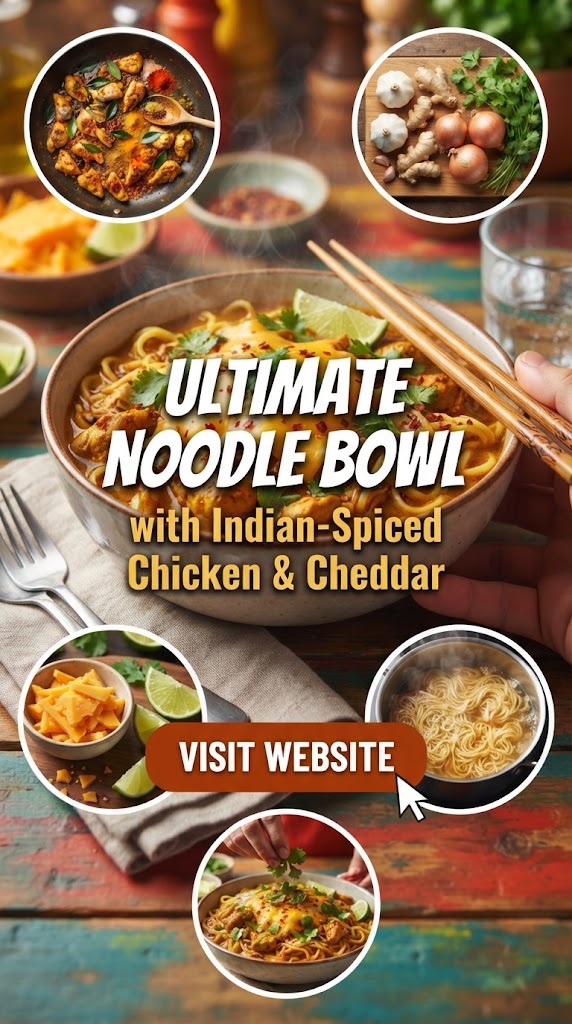
Ultimate Noodle Bowl with Indian-Spiced Chicken and Cheddar
This Ultimate Noodle Bowl with Indian-Spiced Chicken and Cheddar is a delicious fusion meal that brings together tender, juicy chicken coated in aromatic Indian spices, springy noodles, colorful vegetables, a creamy savory sauce, and a generous layer of melted cheddar cheese. It is comforting enough for a cozy dinner but exciting enough to feel completely different from an ordinary bowl of noodles.
The combination may sound unusual at first—Indian-spiced chicken with noodles and cheddar—but the flavors work beautifully together. Warm spices such as cumin, coriander, turmeric, garam masala, paprika, and chili blend with garlic and ginger to create deeply seasoned chicken. The noodles provide a neutral, satisfying base, while vegetables add freshness and texture. Cheddar melts into the hot noodles and sauce, giving the bowl a rich, creamy finish.
This recipe is also flexible. You can make it spicy or mild, add your favorite vegetables, substitute another type of noodle, or adjust the sauce according to your taste.
Recipe Overview
Prep Time: 20 minutes
Marinating Time: 15–30 minutes
Cook Time: 25 minutes
Total Time: About 60–75 minutes
Servings: 4
Cuisine: Indian-inspired fusion
Difficulty: Easy to moderate
Ingredients
For the Indian-Spiced Chicken
- 500–600 g boneless, skinless chicken thighs or chicken breasts
- 2 tablespoons plain yogurt
- 1 tablespoon lemon juice
- 1 tablespoon cooking oil
- 3 garlic cloves, finely minced
- 1 teaspoon freshly grated ginger
- 1 teaspoon ground cumin
- 1 teaspoon ground coriander
- 1 teaspoon paprika
- ½ teaspoon turmeric
- 1 teaspoon garam masala
- ½ teaspoon chili powder, or more to taste
- ½ teaspoon salt
- ¼ teaspoon black pepper
Chicken thighs are particularly good for this recipe because they stay juicy during cooking. Chicken breast works equally well if you prefer a leaner option, but avoid overcooking it.
For the Noodles
- 350–400 g noodles
- 1 tablespoon cooking oil
- 1 medium carrot, julienned
- 1 bell pepper, thinly sliced
- 1 small onion, thinly sliced
- 1 cup shredded cabbage
- 2 green onions, sliced
- 2 garlic cloves, minced
- 1 teaspoon grated ginger
- ½ teaspoon chili flakes, optional
You can use egg noodles, ramen-style noodles, wheat noodles, rice noodles, or another noodle variety that you enjoy.
For the Creamy Indian-Inspired Sauce
- 1 tablespoon butter
- 1 tablespoon cooking oil
- 2 garlic cloves, minced
- ½ teaspoon grated ginger
- 1 teaspoon garam masala
- ½ teaspoon cumin
- ½ teaspoon paprika
- ¼ teaspoon turmeric
- 1 tablespoon tomato paste
- 1 tablespoon soy sauce
- 1 teaspoon chili sauce or hot sauce
- ½ cup heavy cream or cooking cream
- ½ cup chicken broth
- ½ cup grated cheddar cheese
- Salt, to taste
- Black pepper, to taste
For Finishing
- 1 cup freshly grated cheddar cheese
- Fresh cilantro
- Sliced green onions
- Fresh lemon or lime wedges
- Extra chili flakes
- A drizzle of yogurt or cream, optional
Step 1: Prepare the Chicken
Start by preparing the chicken. If you are using chicken breasts, place them on a cutting board and cut them into bite-sized pieces. Try to keep the pieces relatively similar in size so they cook evenly.
If you are using chicken thighs, trim away any large pieces of excess fat and cut the chicken into approximately 2–3 cm pieces.
Place the chicken in a large mixing bowl.
Add the yogurt, lemon juice, cooking oil, minced garlic, grated ginger, cumin, coriander, paprika, turmeric, garam masala, chili powder, salt, and black pepper.
Mix everything thoroughly.
The yogurt is important because it helps coat the chicken with the spices while also helping keep the meat tender. Lemon juice adds brightness and balances the richness of the eventual sauce.
Make sure every piece of chicken is covered with the spice mixture.
Allow the chicken to marinate for at least 15 minutes. If you have more time, 30 minutes will give the flavors more opportunity to develop.
For an especially flavorful result, you can prepare the chicken earlier in the day and keep it refrigerated until you are ready to cook.
Step 2: Prepare the Vegetables
While the chicken marinates, prepare all of the vegetables.
Slice the onion thinly.
Cut the carrot into thin matchsticks or julienne strips. Thin carrot pieces cook quickly and retain a pleasant slight crunch.
Slice the bell pepper into thin strips.
Shred the cabbage.
Finely mince the garlic.
Grate the ginger.
Slice the green onions and keep the green and white portions separate if possible.
This preparation step makes the cooking process much easier because everything will be ready when you need it.
The goal is to avoid overcooking the vegetables. You want them tender enough to eat comfortably but still slightly crisp.
Step 3: Cook the Noodles
Bring a large pot of water to a boil.
Cook the noodles according to the package instructions.
Do not overcook them. Because the noodles will later be tossed with the sauce, they should ideally be just slightly firmer than you would normally eat them.
Once cooked, drain the noodles.
If they are likely to sit for several minutes before being added to the sauce, toss them with a very small amount of oil to prevent excessive sticking.
Do not rinse wheat noodles unless the particular noodle package recommends it. For certain Asian-style noodles, rinsing can help remove excess starch, but for this creamy sauce you generally want some starch on the noodles because it helps the sauce cling to them.
Set the noodles aside.
Step 4: Cook the Indian-Spiced Chicken
Heat a large skillet or heavy frying pan over medium-high heat.
Add about one tablespoon of oil.
When the oil is hot, carefully add the marinated chicken.
Spread the pieces into a single layer.
Avoid constantly stirring the chicken during the first couple of minutes. Allowing it to sit against the hot pan helps develop browned edges and deeper flavor.
Cook for approximately 3–5 minutes on the first side, then turn the pieces.
Continue cooking until the chicken is browned on the outside and cooked through.
The exact cooking time depends on the size of your chicken pieces.
If the pan becomes too crowded, cook the chicken in batches. Overcrowding causes the chicken to release moisture and steam rather than brown.
Once cooked, transfer the chicken to a clean plate.
Do not wash the skillet.
Those browned bits left on the bottom of the pan contain tremendous flavor and will become part of the sauce.
Step 5: Build the Flavor Base
Reduce the heat to medium.
Add butter and a small amount of oil to the same skillet.
Add the sliced onion.
Cook for approximately 2 minutes, stirring occasionally.
Next, add the minced garlic and grated ginger.
Cook for about 30–60 seconds.
Be careful not to burn the garlic.
Add the garam masala, cumin, paprika, and turmeric.
Stir the spices into the onion, garlic, and ginger.
Cooking the spices briefly in the fat helps release their aromas and creates a much deeper flavor than simply adding the spices at the end.
Add the tomato paste.
Stir continuously for approximately one minute.
The tomato paste should darken slightly and become fragrant.
Step 6: Make the Creamy Sauce
Add the chicken broth to the skillet.
Use a wooden spoon or spatula to scrape the browned bits from the bottom of the pan.
This is an important step because those caramelized pieces add savory depth to the sauce.
Add the soy sauce and chili sauce.
Stir well.
Allow the mixture to simmer gently for 2–3 minutes.
Lower the heat.
Add the cream and stir.
Do not allow the sauce to boil aggressively once the cream has been added.
The sauce should become smooth, aromatic, and slightly thick.
Taste it carefully.
Add salt if necessary.
Add black pepper according to your preference.
If you like more heat, add additional chili flakes or hot sauce.
If the sauce tastes too rich, a squeeze of lemon juice can brighten it.
Step 7: Add the Cheddar
Now comes the ingredient that transforms this bowl into something special: cheddar cheese.
Turn the heat to low.
Add about ½ cup of freshly grated cheddar to the sauce.
Stir gently until the cheese melts into the creamy mixture.
Freshly grated cheddar generally melts more smoothly than pre-shredded cheese because packaged shredded cheese often contains ingredients designed to prevent the pieces from sticking together.
Do not add the cheese while the sauce is boiling.
A gentle heat helps create a smooth, creamy texture.
Taste the sauce again.
At this stage, you should have a rich mixture with warm Indian spices, creamy dairy notes, savory soy sauce, tomato, garlic, and ginger.
Step 8: Stir-Fry the Vegetables
In another large skillet or wok, heat a small amount of oil over medium-high heat.
Add the carrots and onions.
Stir-fry for about 2 minutes.
Add the bell pepper.
Continue cooking for another minute.
Add the shredded cabbage.
Stir everything together.
Add the minced garlic and grated ginger.
Cook for another 1–2 minutes.
The vegetables should remain colorful and slightly crisp.
Avoid cooking them until they become completely soft.
This contrast is important because the creamy noodles and tender chicken are soft, while the vegetables provide freshness and texture.
Step 9: Combine the Noodles and Sauce
Add the cooked noodles to the skillet containing the creamy sauce.
Use tongs to gently toss the noodles.
Make sure the sauce coats the noodles from every angle.
If the mixture appears too thick, add a small splash of chicken broth or reserved noodle water.
This can loosen the sauce while helping it coat the noodles evenly.
Continue tossing for approximately 1–2 minutes over low heat.
The noodles should become glossy and thoroughly coated.
Step 10: Add the Vegetables
Add the stir-fried vegetables to the noodles.
Toss gently.
Do not aggressively stir because you want the noodles and vegetables to maintain their texture.
The colors should now be beautiful: golden-orange chicken, creamy noodles, bright peppers, orange carrots, pale cabbage, and fresh green onions.
Step 11: Return the Chicken
Add the cooked Indian-spiced chicken back into the skillet.
Toss everything together.
Allow the mixture to warm for approximately 1–2 minutes.
At this point, you should have a complete noodle dish rather than separate ingredients.
The spicy chicken should be distributed throughout the noodles, while the vegetables provide color and crunch.
Step 12: Adjust the Sauce
Now check the consistency.
If the noodles seem dry, add a few tablespoons of broth or noodle water.
If the sauce is too thin, continue cooking over low heat for another minute or two.
If it is too rich, add a small squeeze of lemon juice.
If you want more spice, add chili flakes.
If you want a stronger Indian flavor, add a small pinch of garam masala.
If you want additional savory flavor, add a tiny splash of soy sauce.
Taste before adding more salt because both the soy sauce and cheddar already contribute saltiness.
Step 13: Prepare the Cheddar Topping
For the ultimate cheesy finish, divide the noodles into bowls while they are still very hot.
Sprinkle each bowl generously with freshly grated cheddar.
The residual heat from the noodles should begin melting the cheese.
For a more dramatic melted-cheese topping, place the filled bowls in an oven-safe dish, add cheddar, and briefly broil until the cheese melts and develops lightly browned spots.
If you use this method, make sure your bowls or dishes are suitable for broiling.
You can also simply cover the skillet with a lid for 1–2 minutes after sprinkling cheese over the noodles. The trapped heat will melt the cheddar.
Step 14: Garnish
Finish each bowl with fresh cilantro.
Add sliced green onions.
Sprinkle over a few chili flakes if desired.
Serve with lemon or lime wedges.
A small spoonful of plain yogurt can also be added to the top if you enjoy a cooling contrast against the spicy chicken.
The combination of hot, creamy, spicy, cheesy noodles with fresh herbs and citrus is incredibly satisfying.
Why This Noodle Bowl Works
At first glance, Indian spices, noodles, and cheddar may seem like an unexpected combination.
But the dish works because each component contributes something different.
The Indian-spiced chicken brings warmth, smokiness, aromatic spices, and protein.
The noodles provide a comforting foundation.
The vegetables bring crunch, color, sweetness, and freshness.
The creamy sauce connects everything together.
The cheddar adds richness, saltiness, and a familiar cheesy flavor.
The lemon or lime cuts through the richness.
The cilantro and green onions provide freshness.
Together, these components create layers of flavor rather than one-dimensional heat.
Choosing the Best Chicken
Both chicken thighs and chicken breasts work well.
Chicken Thighs
Chicken thighs are naturally juicy and flavorful. They are especially forgiving if you accidentally cook them for a little longer than intended.
They also pair beautifully with strong spices.
Chicken Breasts
Chicken breasts provide a leaner option.
The key is avoiding overcooking.
Cut them into evenly sized pieces and cook them only until they are safely cooked through.
For either cut, allowing the chicken to rest briefly after cooking helps preserve its juices.
How to Make the Dish Spicier
If you love spicy food, there are several ways to increase the heat.
Add extra chili powder to the chicken marinade.
Use a hotter chili sauce in the creamy sauce.
Add crushed red pepper flakes.
Add sliced fresh green chilies with the vegetables.
You can also finish the bowl with a spicy chili oil.
For the best flavor, increase the spice gradually rather than adding a large amount at once.
Remember that cheddar and cream soften perceived heat, so the final dish may taste milder than the chicken did by itself.
How to Make It Mild
For a family-friendly version, reduce or completely omit the chili powder and chili flakes.
Use sweet paprika instead of hot paprika.
Choose a mild chili sauce or leave it out.
The cumin, coriander, turmeric, garam masala, ginger, and garlic will still provide plenty of flavor without making the dish overwhelmingly spicy.
You can also serve extra chili sauce on the side so everyone can adjust their own bowl.
Best Noodles to Use
Almost any noodle can work.
Egg Noodles
Egg noodles are excellent because their slightly chewy texture pairs beautifully with creamy sauces.
Ramen-Style Noodles
These cook quickly and absorb the sauce well.
Udon
Udon creates a thicker, chewier bowl and is especially satisfying when combined with creamy sauce.
Rice Noodles
Rice noodles provide a lighter texture and can make the dish feel less heavy.
Spaghetti
If you don’t have Asian-style noodles available, regular spaghetti can work surprisingly well.
The important thing is not the exact noodle but cooking it properly and avoiding overcooking.
Vegetable Variations
You can customize the vegetables according to what you already have.
Try adding:
- Broccoli
- Snow peas
- Mushrooms
- Baby spinach
- Zucchini
- Green beans
- Corn
- Bok choy
- Bean sprouts
- Red cabbage
- Frozen mixed vegetables
Mushrooms add savory depth.
Spinach can be stirred in during the final minute.
Broccoli should be cooked slightly longer than bell peppers or cabbage.
For a more substantial meal, you can add roasted cauliflower, which pairs particularly well with Indian spices.
Make It Extra Creamy
For an even creamier noodle bowl, increase the cream slightly.
You can also add a tablespoon of cream cheese.
Another option is to stir in a little extra cheddar.
However, don’t add too much cheese because excessive cheese can make the sauce heavy or oily.
A small amount of pasta or noodle cooking water can help emulsify the sauce and keep the texture smooth.
Make It Without Heavy Cream
If you don’t have heavy cream, there are several alternatives.
You can use regular cooking cream.
Half-and-half can also work.
For a yogurt-based version, reduce the heat significantly and stir in plain yogurt carefully.
Do not add cold yogurt directly to a boiling sauce because it may separate.
You can also use evaporated milk for a creamy result.
Make It Ahead
This noodle bowl is best served immediately, but several components can be prepared ahead of time.
The chicken can be marinated several hours in advance.
The vegetables can be sliced and stored in the refrigerator.
The sauce can be prepared ahead and gently reheated.
If preparing the entire dish in advance, slightly undercook the noodles because they will continue absorbing sauce as they sit.
When reheating, add a splash of broth or water to restore the creamy consistency.
Storage
Allow leftovers to cool reasonably quickly and transfer them to an airtight container.
Refrigerate promptly.
For best quality, enjoy leftovers within a few days.
When reheating, use a skillet over medium-low heat or microwave in short intervals.
Add a tablespoon or two of broth, water, or cream while reheating if the noodles have absorbed too much sauce.
Stir occasionally to distribute the heat.
Avoid overheating because this can make the chicken dry and cause the cheese sauce to separate.
Freezing Advice
Because the dish contains cream and cheese, freezing the complete finished bowl may slightly change its texture after thawing.
For the best results, freeze the cooked chicken separately if you want to prepare components ahead.
You can then prepare fresh noodles and sauce when you’re ready to serve.
If you do freeze the complete dish, thaw it slowly in the refrigerator and reheat gently with a splash of liquid.
Common Mistakes to Avoid
1. Overcooking the Chicken
Dry chicken can ruin an otherwise excellent noodle bowl.
Cut the chicken into evenly sized pieces and cook until safely done without unnecessarily extending the cooking time.
2. Burning the Spices
Indian spices should become fragrant but should not be allowed to burn.
If the pan is extremely hot, reduce the temperature before adding dry spices.
Burned spices can make the entire sauce bitter.
3. Overcooking the Vegetables
The vegetables should have texture.
Don’t cook them until they become mushy.
4. Boiling the Cheese Sauce
High heat can cause dairy-based sauces to become grainy or separate.
Keep the heat low when adding cream and cheddar.
5. Overcooking the Noodles
Remember that the noodles continue cooking when combined with the hot sauce.
Slightly undercooked noodles are preferable.
6. Adding Too Much Salt
Soy sauce, cheddar, chicken seasoning, and broth can all contain salt.
Taste before adding additional salt.
Serving Suggestions
This noodle bowl is filling enough to serve as a complete meal.
For a larger dinner, you can serve it alongside a simple cucumber salad.
A fresh tomato and onion salad also works beautifully.
You could add warm naan or flatbread for an extra comforting meal, although the noodles themselves are already quite substantial.
For a refreshing contrast, serve chilled cucumber slices with lemon and a little yogurt.
Restaurant-Style Presentation
Presentation can make this simple homemade dish look impressive.
Instead of simply placing everything into a bowl, arrange it thoughtfully.
Place the noodles in the center.
Arrange several pieces of golden-brown chicken over the top.
Add a few colorful vegetables around the chicken.
Sprinkle cheddar over the hottest part of the bowl so it begins melting.
Finish with cilantro and green onions.
Add a lemon wedge to one side.
A tiny drizzle of chili oil can provide a beautiful finishing touch.
The result looks like a restaurant-style fusion bowl while remaining easy enough for a weeknight dinner.
Flavor Variations
Tandoori-Style Chicken Noodle Bowl
Increase the paprika, cumin, coriander, and garam masala in the chicken marinade.
Add a little extra yogurt.
Cook the chicken until deeply browned.
Use a creamy tomato-based sauce.
Butter Chicken-Inspired Noodles
Create a richer sauce with butter, tomato paste, cream, garam masala, and mild chili.
Add the cooked chicken and noodles.
Finish with cheddar for a fusion-style twist.
Spicy Masala Noodle Bowl
Add extra chili, fresh green chilies, cumin, coriander, and garam masala.
Use less cream and more broth for a lighter sauce.
Cheesy Chicken Curry Noodles
Add a small amount of curry powder alongside the garam masala.
Increase the cheddar.
This version is especially comforting and rich.
Step-by-Step Quick Version
If you’re cooking this recipe on a busy weeknight, the process can be simplified.
First, marinate the chicken with yogurt, lemon, garlic, ginger, and spices.
Second, boil the noodles until just tender.
Third, brown the chicken in a large skillet.
Fourth, remove the chicken and cook the onion, garlic, and ginger.
Fifth, add the spices and tomato paste.
Sixth, pour in broth, soy sauce, chili sauce, and cream.
Seventh, melt cheddar into the sauce.
Eighth, stir-fry the vegetables separately.
Ninth, add noodles to the creamy sauce.
Tenth, fold in vegetables and chicken.
Finally, top with more cheddar, cilantro, green onions, and lemon.
Tips for Perfect Flavor Every Time
Use freshly grated ginger and garlic whenever possible. Their flavor is much brighter than dried or pre-minced alternatives.
Toast the spices briefly in oil before adding the liquid ingredients.
Brown the chicken rather than simply steaming it.
Use freshly grated cheddar for the smoothest melt.
Don’t drown the vegetables in sauce. Their texture should remain noticeable.
Taste the sauce before serving.
Balance is the secret to this dish. You want spice, creaminess, saltiness, acidity, and savory flavor working together.
If the bowl tastes too rich, add lemon.
If it tastes flat, add salt or soy sauce.
If it tastes too mild, add chili.
If it tastes too spicy, add cream or yogurt.
If it tastes too thick, add broth.
Nutrition-Friendly Adjustments
If you want a lighter version, use chicken breast, reduce the cheddar, and replace heavy cream with a lighter cooking cream.
Increase the vegetables.
Use whole-wheat noodles if you enjoy their texture.
You can also reduce the amount of oil used for cooking.
For additional protein, add chickpeas, peas, or a boiled egg.
For a lower-carbohydrate variation, replace some of the noodles with shredded cabbage or zucchini noodles.
A Perfect Weeknight Dinner
One of the best things about this recipe is how adaptable it is.
You don’t need a special occasion to make it.
The chicken can be marinated quickly while you prepare the vegetables.
The noodles cook in only a few minutes.
The sauce comes together in the same pan used for the chicken, meaning you don’t need a complicated collection of cookware.
The result is a warm, filling dinner with enough personality to become a family favorite.
The Indian-inspired spice blend makes the chicken incredibly aromatic, while the cheddar brings a familiar creamy richness.
The vegetables prevent the dish from becoming overly heavy, and the citrus finish keeps the flavors bright.
Final Recipe
When everything is finished, each bowl should contain:
Tender Indian-spiced chicken + creamy noodles + crisp vegetables + aromatic sauce + melted cheddar + fresh herbs + citrus.
The chicken should be juicy and deeply seasoned.
The noodles should be tender but not mushy.
The vegetables should retain a slight crunch.
The sauce should be creamy enough to coat every strand without becoming excessively thick.
The cheddar should melt into the hot noodles and provide a rich, savory finish.
The final squeeze of lemon or lime should brighten the entire bowl.
This Ultimate Noodle Bowl with Indian-Spiced Chicken and Cheddar is a fantastic example of how different culinary influences can come together in one comforting dish. Indian spices provide warmth and complexity, noodles add satisfying comfort, vegetables bring freshness and texture, and cheddar creates the indulgent finish that ties everything together.
For the best experience, serve the bowls immediately while the noodles are steaming hot and the cheddar is still melting. Add plenty of fresh cilantro and green onions, keep extra chili sauce on the table for anyone who enjoys more heat, and serve lemon wedges alongside.
The result is a creamy, spicy, cheesy, colorful chicken noodle bowl that’s hearty enough for dinner, easy enough for a weeknight, and distinctive enough to make again and again.