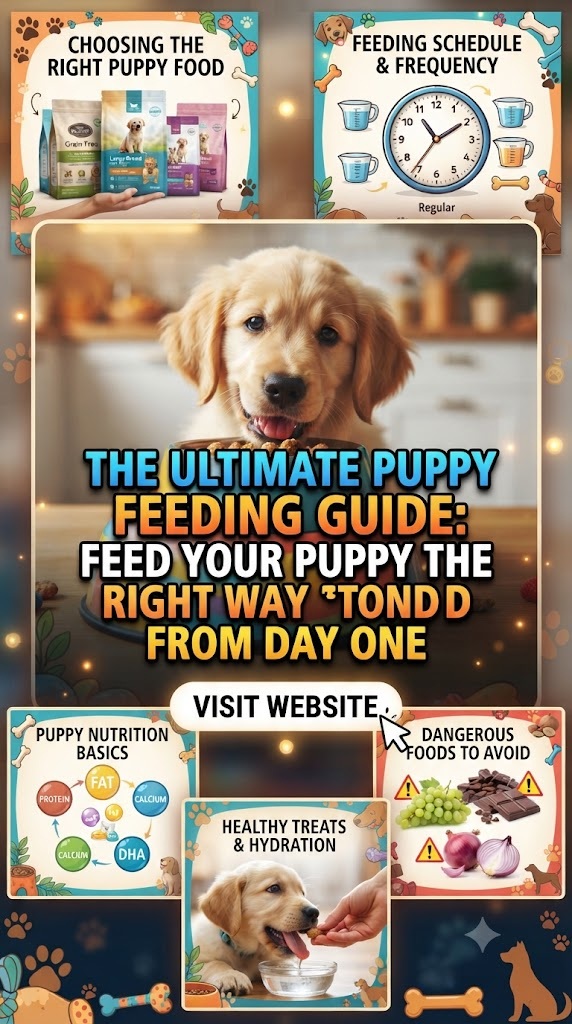
Feeding Bible: Everything You Need to Raise a Healthy, Happy Dog from Day One to Year One
Feeding a puppy isn’t just about filling a bowl. It is the literal foundation of their entire life. The nutrients you provide in the first twelve months dictate their bone density, cognitive development, immune system strength, and even their temperament.
This comprehensive guide is designed to take the guesswork out of puppy nutrition. From the science of calories to the “secret” ingredients to avoid, we’re diving deep into the art and science of feeding your new best friend.
1. Why Puppy Nutrition is Radically Different from Adult Dogs
It’s tempting to think of puppies as just “small dogs,” but biologically, they are more like high-performance athletes in a constant state of construction.
The Growth Spurt Factor
Puppies grow at an incredible rate. Depending on the breed, a puppy can reach half their adult body weight in just four to six months. To fuel this, they require significantly more energy than adult dogs. In fact, a young puppy may need up to twice the calories per pound of body weight as an adult of the same breed.
The Developmental Pillars
- Protein for Muscle: Puppies need higher concentrations of amino acids to build tissues and organs.
- Calcium and Phosphorus for Bones: This is a delicate balance. Too little, and bones become brittle; too much (especially in large breeds), and they grow too fast, leading to lifelong joint deformities.
- DHA for Brain Power: Docosahexaenoic acid (DHA) is an Omega-3 fatty acid crucial for brain and vision development. Studies show puppies fed DHA-rich diets are easier to train.
- Fat for Energy: Puppies have small stomachs but huge energy needs. Fat provides a concentrated energy source to keep them zooming.
2. The Puppy Feeding Timeline: Week-by-Week Breakdown
Navigating the first year can be confusing. Here is the definitive roadmap for your puppy’s culinary journey.
Weeks 0–4: The Mother’s Milk Phase
During the first month, mother’s milk is a “superfood.” It contains colostrum, which provides essential antibodies to protect the puppy while their immune system is still developing. If you are fostering an orphaned puppy, a high-quality canine milk replacer is mandatory—never use cow’s milk.
Weeks 4–8: The Transition (Weaning)
This is when the “mush” phase begins. Puppies start showing interest in solid food.
- The Process: Mix high-quality puppy kibble with warm water or puppy milk replacer until it reaches the consistency of oatmeal.
- Frequency: Small amounts 4 times a day.
Weeks 8–12: Welcome Home
Most puppies join their new families during this window. This is the most critical time for establishing a routine.
- Consistency is King: For the first week, feed the same food the breeder or shelter used. Sudden changes plus the stress of a new home equals a very upset puppy tummy.
- Schedule: 3 to 4 meals per day.
3 to 6 Months: The “Leggy” Phase
You’ll notice your puppy losing their “puppy fat” and becoming leaner and taller.
- The Switch: You can usually move from 4 meals to 3 meals a day.
- Watch the Weight: It is vital not to overfeed during this time. Excessive weight gain puts massive pressure on developing joints.
6 to 12 Months: Approaching Maturity
For small and medium breeds, growth begins to level off. Large and giant breeds, however, are still growing rapidly.
- Frequency: 2 meals per day.
- The Switch to Adult Food: Small breeds can often switch to adult food at 9–12 months. Giant breeds (like Great Danes) should stay on puppy-specific formulas for up to 18–24 months.
3. Deciphering the Label: How to Choose a High-Quality Puppy Food
The pet food aisle is a marketing minefield. Words like “natural,” “holistic,” and “premium” aren’t legally defined by the AAFCO (Association of American Feed Control Officials). Here is what actually matters.
The AAFCO Statement
Look for a sentence on the bag that says: “This food is formulated to meet the nutritional levels established by the AAFCO Dog Food Nutrient Profiles for growth or all life stages.” If it doesn’t say “growth” or “all life stages,” it is not suitable for a puppy.
Ingredient Red Flags
- Generic “Meat” or “Animal” Fat: If they don’t specify the animal (e.g., “chicken fat” or “beef meal”), it’s a red flag for low-quality rendering.
- Artificial Colors: Puppies don’t care if their food is red or green. These are added for the human buyer and can cause allergies.
- BHA/BHT: Chemical preservatives that have been linked to health issues in some studies. Look for natural preservatives like Tocopherols (Vitamin E).
The First Five Ingredients
Ingredients are listed by weight. You want the first three ingredients to be identifiable meat sources (e.g., Deboned Chicken, Turkey Meal, Salmon).
4. The Great Debate: Kibble vs. Wet vs. Raw vs. Fresh
There is no “one size fits all” answer, but here is the breakdown of each method:
Dry Kibble
- Pros: Convenient, cost-effective, helps slightly with dental health through mechanical scraping, easy to use in training.
- Cons: Lower moisture content; some brands are high in fillers/carbs.
Wet (Canned) Food
- Pros: Highly palatable for picky eaters, high moisture content (good for hydration).
- Cons: Expensive for large breeds, can lead to softer stools, doesn’t provide dental benefits.
Fresh/Subscription Services (e.g., The Farmer’s Dog)
- Pros: Human-grade ingredients, tailored to your puppy’s specific weight and activity level, highly digestible.
- Cons: Most expensive option, requires freezer/fridge space.
Raw Diets (BARF – Biologically Appropriate Raw Food)
- Pros: Enthusiasts claim it leads to shinier coats and smaller stools.
- Cons: Extreme caution required for puppies. It is incredibly difficult to balance the calcium/phosphorus ratio at home. A mistake here can cause permanent skeletal damage. Bacteria (Salmonella/Listeria) are also a risk to both the puppy and the humans in the house.
5. How Much Should You Feed? (The Math of Puppy Growth)
“Check the back of the bag” is a starting point, but it isn’t the law. Every puppy has a different metabolism.
The Calorie Calculation
Veterinarians use a formula called Resting Energy Requirement (RER).
- RER = 70 × (body weight in kg)^0.75
- A growing puppy usually needs 2 to 3 times their RER.
The Body Condition Score (BCS)
Instead of obsessing over the scale, look at your puppy.
- The Rib Test: You should be able to feel the ribs easily under a thin layer of fat, but they shouldn’t be visible.
- The Waistline: Looking from above, the puppy should have a visible “tuck” at the waist.
- The Profile: From the side, the tummy should slope upward from the chest to the hind legs.
If your puppy looks like a literal sausage, you are overfeeding.
6. Large Breed vs. Small Breed: Two Different Worlds
One of the most dangerous mistakes a puppy owner can make is feeding a Great Dane puppy the same way they’d feed a Pomeranian.
Large & Giant Breeds (Labs, Goldens, Danes, Shepherds)
These dogs are prone to Hip Dysplasia and Elbow Dysplasia. If they grow too fast, their bones develop faster than their supporting ligaments and muscles can handle.
- Lower Fat Content: To prevent rapid weight gain.
- Controlled Calcium: To prevent orthopedic diseases.
- Pro Tip: Always look for a bag specifically labeled “Large Breed Puppy.”
Small & Toy Breeds (Yorkies, Chihuahuas, Maltese)
Small puppies have incredibly high metabolic rates and are prone to Hypoglycemia (dangerously low blood sugar).
- Frequent Feeding: They may need 4 to 5 small meals a day to keep their glucose levels stable.
- Small Kibble Size: To prevent choking and make chewing easier.
7. The “Treat” Trap: Maintaining the 90/10 Rule
Training a puppy requires rewards, but those calories add up fast.
- The 10% Rule: No more than 10% of your puppy’s daily caloric intake should come from treats.
- Use Their Kibble: During training sessions, use a portion of their daily meal as “treats.” Your puppy doesn’t know the difference!
- Healthy Human Alternatives:
- Blueberries (Antioxidants)
- Carrots (Great for teething)
- Green Beans (Low calorie “filler”)
- Plain, cooked pumpkin (Excellent for digestion)
Toxic Foods: The “Never” List
- Chocolate & Caffeine: Heart and nervous system stimulants.
- Grapes & Raisins: Can cause sudden kidney failure.
- Onions & Garlic: Damage red blood cells.
- Xylitol: An artificial sweetener found in some peanut butters and “sugar-free” treats. It is lethal and causes rapid liver failure.
- Macadamia Nuts: Causes weakness and vomiting.
8. Hydration: The Forgotten Nutrient
A puppy’s body is about 70-80% water.
- Access: Puppies should have access to clean, fresh water at all times.
- The Exception: You may want to pick up the water bowl 1-2 hours before bedtime to help with potty training.
- Dehydration Check: Gently pinch the skin between the shoulder blades. It should snap back instantly. If it stays “tented,” your puppy is dehydrated and needs a vet immediately.
9. Dealing with Common Puppy Feeding Issues
The “Picky Eater”
If your puppy refuses to eat, first rule out medical issues. If they are healthy, they might be “training” you to give them better food.
- The 15-Minute Rule: Put the food down for 15 minutes. If they don’t eat, pick it up. Do not offer treats. Offer the food again at the next scheduled mealtime. A healthy puppy will not starve themselves.
Diarrhea and Upset Stomachs
Puppies have notoriously sensitive guts.
- The “Bland Diet”: If your puppy has a mild stomach upset, a mix of boiled white rice and plain boiled chicken (no skin, no bones, no seasoning) can help settle things.
- Probiotics: Ask your vet about FortiFlora or other canine-specific probiotics to build healthy gut flora.
Coprophagia (Eating Poop)
It’s gross, but common. Sometimes it’s a sign of a nutrient deficiency, but often it’s just curiosity or a habit learned in the litter.
- The Fix: Clean up immediately. You can also add “stool deterrent” treats to their food which makes the output taste bad to them (as if it didn’t already!).
10. The 7-Day Rule for Switching Foods
Never switch a puppy’s food “cold turkey.” Their digestive systems aren’t equipped for sudden changes. Use this schedule:
- Day 1-2: 75% Old Food, 25% New Food.
- Day 3-4: 50% Old Food, 50% New Food.
- Day 5-6: 25% Old Food, 75% New Food.
- Day 7: 100% New Food.
If at any point the puppy develops diarrhea, stay at that ratio for a few more days until things firm up.
11. Supplements: Are They Necessary?
In most cases, no. If you are feeding a high-quality, AAFCO-approved puppy food, it already contains the perfect balance of vitamins and minerals. Adding extra calcium to a large-breed puppy’s diet can actually cause Physical deformities.
The only exceptions are:
- Fish Oil (Omega-3s): If the food is low in DHA/EPA, this can support coat and brain health.
- Glucosamine: Occasionally recommended for large breeds, but usually not until they are slightly older.
- Consult your vet before adding anything to the bowl.
12. The Cost of Feeding: Budgeting for Your Puppy
While it’s tempting to buy the cheapest bag at the grocery store, “cheap” food often ends up costing more in the long run.
- Filler Content: Low-quality foods are packed with corn, soy, and wheat. This means you have to feed more volume to meet the puppy’s nutritional needs.
- Vet Bills: Poor nutrition leads to allergies, skin issues, and joint problems later in life.
- The Math: Investing in a mid-to-high-tier food usually results in smaller feeding portions and fewer health complications.
13. Summary Checklist for Success
- Choose a food labeled for “Growth” or “Puppy.”
- Establish a strict feeding schedule (3-4 times a day).
- Monitor Body Condition Score, not just weight.
- Ensure water is always available.
- Limit treats to 10% of total calories.
- Use the 7-day transition rule for new foods.
- Talk to your vet at every vaccination appointment about their growth rate.
Final Thoughts
Feeding your puppy is one of the most significant ways you bond with them. It is an act of care that sustains their life and fuels their transition into a loyal adult companion. By understanding the science behind the kibble and staying observant of your puppy’s unique needs, you aren’t just feeding a dog—you’re building a future of health, vitality, and endless games of fetch.
Happy feeding!