Radiant Dog Coat: Professional Secrets for Every Breed
Every dog owner knows the feeling of pride when their furry companion walks down the street with a coat that gleams in the sunlight. Beyond aesthetics, however, a dog’s coat is the ultimate barometer of their internal health. A dull, brittle, or thinning coat is often the first sign that something is amiss internally, while a thick, lustrous mane signifies a dog in peak physical condition.
In this comprehensive guide, we are pulling back the curtain on the industry secrets used by professional groomers, veterinarians, and show-dog handlers to achieve that “Best in Show” glow. From the molecular biology of hair growth to the specific kitchen staples that act as “superfoods” for fur, this is everything you need to know about mastering the art of the healthy coat.
1. The Biology of the Bark: Understanding Your Dog’s Coat
The Different Types of Coats
Every breed has a unique coat architecture, and understanding yours is the first step toward proper care:
- Double Coats (Huskies, Labs, Goldens): These dogs have a soft, insulating undercoat and a tougher outer layer of guard hairs.
- Single Coats (Greyhounds, Boxers): Minimal shedding but high sensitivity to cold and sun.
- Curly/Wool Coats (Poodles, Bichons): These don’t “shed” in the traditional sense; instead, the hair gets trapped, leading to painful matting if not brushed daily.
- Wire Coats (Terriers): Rough textures that require “stripping” rather than traditional clipping to maintain the coat’s health and color.
- Silky Coats (Yorkies, Afghan Hounds): Long, fine hair that requires constant hydration to prevent breakage.
The Hair Growth Cycle
Dog hair grows in three phases:
- Anagen Phase: The active growth phase.
- Catagen Phase: The transitional phase where growth stops.
- Telogen Phase: The resting phase before the hair eventually falls out (sheds). Healthier dogs have longer anagen phases, meaning their fur stays attached longer and grows thicker.
2. Nutrition: The “Inside-Out” Strategy
You can spend a fortune on expensive shampoos, but if your dog’s diet is lacking, their coat will never reach its full potential. Hair is composed primarily of protein (keratin), meaning a low-protein diet is the fastest way to a dull coat.
The “Liquid Gold”: Omega Fatty Acids
If there is one “secret” to a shiny coat, it is Omega-3 and Omega-6 fatty acids.
- Omega-3 (EPA and DHA): Found in fish oils (Salmon, Krill). These reduce inflammation of the skin, which prevents dandruff and itching.
- Omega-6 (Linoleic Acid): Found in plant oils (Flaxseed, Sunflower). This is the primary driver of that “glossy” finish.
Essential Minerals for Fur Strength
- Zinc: A deficiency in zinc leads to crusty skin and hair loss.
- Biotin (Vitamin B7): Known as the “hair growth vitamin,” it helps synthesize fatty acids and promotes skin cell regeneration.
- Copper: Essential for the production of melanin, which gives your dog’s coat its vibrant color.
1. Why a Healthy Coat Matters More Than Just Appearance
- What your dog’s coat reveals about overall health
- Signs of a healthy vs. unhealthy coat
- How skin and coat health are connected
- Common causes of dull, dry, or brittle fur
2. Feed a Nutrient-Rich Diet for a Naturally Shiny Coat
- The importance of high-quality protein
- Healthy fats that nourish skin and fur
- Essential vitamins and minerals for coat health
- Foods that promote a glossy coat
- Ingredients to avoid in dog food
3. Omega-3 and Omega-6 Fatty Acids: The Secret to Silky Fur
- How these healthy fats improve coat quality
- Best natural sources
- Choosing the right supplements
- Signs your dog may benefit from extra fatty acids
4. Keep Your Dog Properly Hydrated
- Why hydration affects coat condition
- Signs of dehydration
- Tips to encourage better water intake
- Seasonal hydration needs
5. Brush Your Dog the Right Way
- Benefits of regular brushing
- Choosing the correct brush for different coat types
- How often each breed should be brushed
- Preventing mats, tangles, and excessive shedding
6. Bathe Your Dog Without Damaging the Coat
- How often dogs should be bathed
- Selecting a gentle dog shampoo
- Avoiding products that dry out the skin
- Proper drying techniques after bathing
7. Protect Your Dog’s Skin from Dryness
- Common causes of dry skin
- Maintaining skin moisture naturally
- Indoor humidity and environmental factors
- Seasonal coat care tips
8. Control Fleas, Ticks, and Other Parasites
- How parasites damage the skin and coat
- Early warning signs
- Safe prevention methods
- Importance of regular inspections
9. Maintain a Healthy Weight
- How obesity affects skin and coat quality
- Balanced nutrition and exercise
- Keeping metabolism healthy
10. Exercise Improves Coat Health
- Increased circulation supports healthy skin
- Outdoor activities that benefit the coat
- Safe exercise recommendations by age
11. Reduce Stress for a Healthier Coat
- The connection between stress and shedding
- Signs of anxiety-related coat problems
- Enrichment activities that promote relaxation
- Building a consistent daily routine
12. Regular Grooming Beyond Brushing
- Nail trimming and hygiene
- Ear cleaning
- Dental health and its indirect impact
- Professional grooming schedule
13. Know the Warning Signs of Coat Problems
- Excessive shedding
- Bald patches
- Constant scratching
- Red or inflamed skin
- Hot spots
- Strong skin odor
- Flaky skin and dandruff
14. Common Health Conditions That Affect the Coat
- Allergies
- Hormonal disorders
- Skin infections
- Nutritional deficiencies
- Autoimmune diseases
- When to consult a veterinarian
15. Best Foods That Support Healthy Skin and Coat
- Salmon
- Sardines
- Eggs
- Pumpkin
- Blueberries
- Sweet potatoes
- Spinach
- Coconut oil (used appropriately)
- High-quality commercial dog food
16. Seasonal Coat Care Tips
- Winter coat protection
- Summer sun safety
- Spring shedding management
- Fall grooming routine
17. Healthy Coat Care by Breed Type
- Short-haired breeds
- Double-coated breeds
- Long-haired breeds
- Curly-coated breeds
- Hairless breeds and skin care
18. Daily Coat Care Checklist
- Fresh water
- Balanced meals
- Quick brushing session
- Skin inspection
- Exercise
- Clean sleeping area
- Parasite check
19. Coat Care Myths You Should Stop Believing
- More baths always mean a cleaner coat
- Human shampoo is safe for dogs
- Shaving every dog keeps them cool
- Supplements alone solve coat issues
20. Final Tips for a Lifetime of Healthy Fur
Give your dog plenty of exercise, love, and mental stimulation
Build a consistent grooming routine
Prioritize balanced nutrition
Schedule regular veterinary checkups
Address skin problems early
Monitor changes in coat texture and shine
3. The Professional Grooming Blueprint
Professional groomers don’t just “wash” a dog; they follow a systematic process designed to preserve the coat’s natural oils while removing debris.
Step 1: The Pre-Bath De-Shed
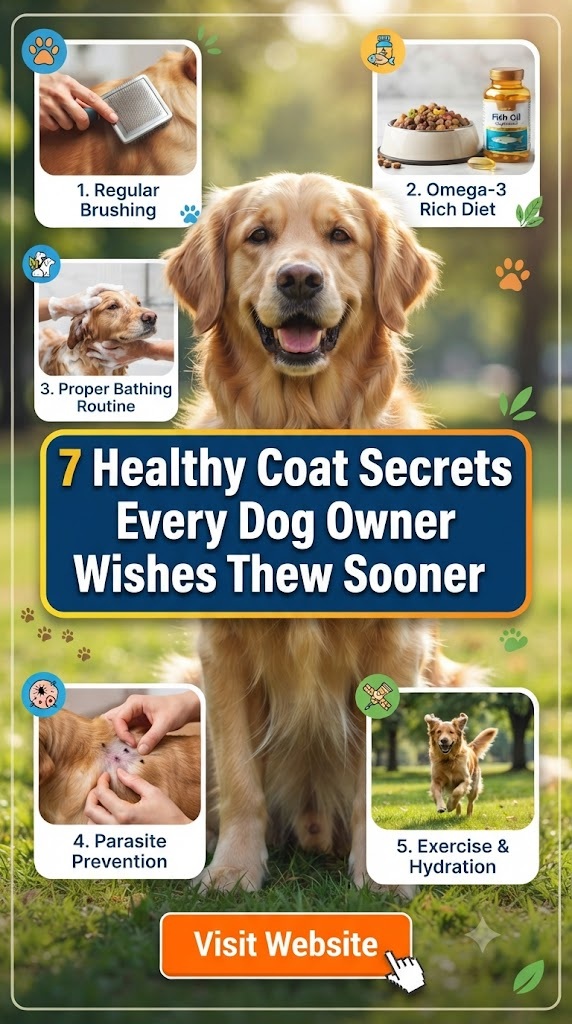
Never put a matted or heavily shedding dog directly into the tub. Water “sets” mats, making them almost impossible to remove. Use a high-quality slicker brush or a de-shedding tool (like a Furminator for double coats) to remove the “dead” hair while the coat is dry.
Step 2: Choosing the Right Shampoo
Human skin has a pH of about 5.5 (acidic), while dog skin is closer to 7.0 (neutral). Using human shampoo on a dog disrupts their “acid mantle,” leaving them vulnerable to bacteria and parasites.
- For Sensitive Skin: Look for colloidal oatmeal and aloe vera.
- For White Coats: Use a “bluing” shampoo that neutralizes yellow stains without using bleach.
- For Smelly Dogs: Use an enzymatic shampoo that breaks down organic odors rather than just masking them.
Step 3: The Conditioner Secret
Many owners skip the conditioner, but this is a mistake. Shampoo opens the hair cuticle to clean it; conditioner closes the cuticle, locking in moisture and providing a protective shield against dirt. For long-haired breeds, a “leave-in” conditioning spray can prevent tangles between baths.
4. Seasonal Care: Adapting to the Elements
A dog’s coat needs change as the seasons shift. Failing to adapt can lead to “hot spots” in summer or “winter itch” in the colder months.
Summer Survival
- The Sunburn Myth: Short-haired and light-colored dogs can get sunburned. Use dog-specific sunscreen on their nose and ears.
- Avoid the “Shave-Down”: Contrary to popular belief, shaving a double-coated dog (like a Husky) does not keep them cool. The undercoat actually acts as insulation against the heat. Shaving can ruin the coat’s texture permanently.
Winter Protection
- The Humidity Problem: Indoor heating sucks moisture out of the air and your dog’s skin. Consider a humidifier in the room where your dog sleeps.
- Paw Care: Salt and de-icing chemicals on sidewalks can cause chemical burns. Always wash your dog’s paws after a winter walk and apply a beeswax-based paw balm.
5. Natural Remedies: Kitchen Secrets for a Better Coat
You don’t always need to go to the pet store for a coat upgrade. Some of the most effective treatments are sitting in your pantry.
- Coconut Oil: Rich in medium-chain triglycerides. You can feed it to your dog (1 teaspoon per 10 lbs of body weight) or rub a small amount between your palms and massage it into their fur for an instant shine.
- Apple Cider Vinegar (ACV) Rinse: Mix 1 part ACV with 3 parts water. Use it as a final rinse after a bath to kill bacteria, restore pH balance, and act as a natural flea repellent.
- Egg Yolks: Raw or lightly cooked egg yolks are a powerhouse of biotin and protein. Adding one egg to your dog’s meal twice a week can work wonders for hair strength.
6. Identifying “Red Flags” in the Coat
Sometimes, a bad coat isn’t a grooming issue—it’s a medical one. You should consult a vet if you notice:
- Symmetrical Hair Loss: This often points to hormonal issues like Hypothyroidism or Cushing’s Disease.
- The “Yeasty” Smell: If your dog smells like corn chips, they likely have a fungal overgrowth.
- Excessive Licking: Usually a sign of environmental or food allergies.
- Black Specks: “Flea dirt” (flea excrement) is a sign of an infestation, even if you don’t see live fleas.
7. Tool Mastery: Which Brush for Which Fur?
Using the wrong tool is like trying to comb your hair with a fork. It’s ineffective and can be painful for the dog.
- Slicker Brush: The “All-Star.” Good for almost all breeds to remove loose hair and debris.
- Undercoat Rake: Essential for Golden Retrievers, German Shepherds, and Newfoundlands. It reaches through the topcoat to pull out the dead undercoat.
- Bristle Brush: Best for short-haired breeds (Boxers, Pugs). It distributes natural oils and adds a finishing shine.
- Greyhound Comb: A metal comb used to check for “hidden” mats behind the ears and in the “armpits” of the dog.
- Rubber Curry Brush: Perfect for bath time to massage the skin and for short-haired dogs to remove “stray” hairs.
8. Stress and the Coat: The Mind-Body Connection
Dogs are sensitive creatures. High levels of cortisol (the stress hormone) can lead to a condition called “telogen effluvium,” where the hair follicles prematurely enter the resting phase and fall out.
- Common Stressors: Moving house, new additions to the family, or loud noises (fireworks/thunder).
- The Solution: Ensure your dog has a “safe space,” plenty of mental stimulation (lick mats, puzzle toys), and consistent exercise. A happy dog is a shiny dog.
9. Breed-Specific “Pro-Tips”
The Poodle/Doodle Dilemma
These breeds are prone to “line-matting,” where the hair mats right at the skin level while the top looks fine. You must use the “line-brushing” technique: section the hair and brush from the skin outward to ensure no tangles remain.
The Brachycephalic (Flat-Faced) Secret
Bulldogs and Pugs have skin folds that trap moisture and bacteria. Use unscented baby wipes or specialized “wrinkle wipes” daily to clean these folds, then dry them thoroughly to prevent “intertrigo” (skin fold dermatitis).
The “Shedding” Breeds (Labs/Beagles)
These dogs shed year-round. The secret here is a high-velocity dryer. After a bath, using a professional-grade dryer literally “blasts” the dead hair out of the follicles, reducing the amount of fur on your furniture by up to 80%.
10. The 7-Day “Glow Up” Challenge
Want to see an immediate difference? Follow this 7-day protocol:
- Day 1: Add 1 tablespoon of high-quality Salmon Oil to dinner. Thoroughly brush for 15 minutes.
- Day 2: Deep-clean all dog bedding to remove old dander and allergens.
- Day 3: Give a lukewarm bath using an oatmeal-based shampoo and a heavy conditioner.
- Day 4: Massage the coat with a tiny amount of coconut oil to lock in the bath moisture.
- Day 5: Introduce a raw egg yolk to their meal.
- Day 6: Go for a long walk to stimulate blood circulation to the skin.
- Day 7: Use a bristle brush for a final “buffing” of the fur.
11. Environmental Factors You Haven’t Considered
The Impact of Hard Water
If you live in an area with “hard” water (high mineral content), it can leave a film on your dog’s coat, making it feel “waxy” or “crunchy.” Using a filtered shower head for dog baths can make a massive difference in softness.
Grass Allergies
Many dogs are allergic to specific types of pollen or grass. If your dog gets “red belly” or itchy paws after being outside, simply wiping them down with a damp cloth when they come inside can prevent the allergens from reaching the skin.
Over-Bathing
Believe it or not, you can wash your dog too much. Most dogs only need a bath every 4–6 weeks. Over-bathing strips the “sebum” (natural oils) that protect the skin, leading to a compensatory overproduction of oil that makes the dog smell worse.
12. Conclusion: A Commitment to Care
A healthy coat is not the result of a single “magic” product; it is the culmination of consistent nutrition, proper tools, and an understanding of your dog’s unique needs. When you run your hand over your dog’s back and feel that silkiness, you aren’t just seeing beauty—you’re seeing the results of your dedication to their well-being.
By treating the coat as an extension of their internal health, you aren’t just making them look better; you are ensuring they feel better, live longer, and remain the vibrant, energetic companions they were meant to be. Start with one small change today—whether it’s adding fish oil to their bowl or picking up a better brush—and watch the transformation begin.