Canine Joint Health: 25 Superfoods to Keep Your Pup Leaping for Joy
Every dog owner knows the heartbreak of watching a once-energetic puppy start to slow down. Whether it’s a slight hesitation before jumping into the car, a stiffness when rising from a nap, or a complete loss of interest in the morning game of fetch, joint issues are among the most common—and most painful—conditions affecting our canine companions.
While genetics and age play significant roles, we often overlook the most powerful tool in our arsenal: the food bowl.
What your dog eats directly impacts the inflammation levels in their body, the density of their cartilage, and the lubrication of their joints. This comprehensive guide dives deep into the world of canine nutrition, uncovering the superfoods that don’t just fill their bellies, but actually rebuild and protect their skeletal system.
1. The Power of Omega-3s: The Natural Lubricant
If joints are the hinges of the body, Omega-3 fatty acids are the high-grade oil that keeps them from rusting. These essential fatty acids are legendary for their anti-inflammatory properties.
Oily Fish (Sardines, Mackerel, and Anchovies)
Small, oily fish are powerhouses of EPA and DHA. Unlike larger fish, they are low in mercury and toxins.
- How it works: These fats inhibit the enzymes that break down cartilage.
- Pro-Tip: Feed sardines packed in water (not oil or brine) as a weekly topper.
Green-Lipped Mussels (GLM)
Found only in the pristine waters of New Zealand, these are often called the “Holy Grail” of joint health.
Wild-Caught Salmon
Rich in protein and Omega-3s, salmon provides the building blocks for muscle, which in turn supports the joints.
- Note: Always cook salmon thoroughly to avoid “salmon poisoning disease” caused by parasites found in raw Pacific salmon.
2. The Collagen and Gelatin Connection
Cartilage is largely made of collagen. As dogs age, their natural collagen production slows down. Replacing it through diet is vital.
Bone Broth: The Liquid Gold
Bone broth is perhaps the most viral health trend in the dog world for a reason. By simmering bones for 24–48 hours, you extract collagen, glucosamine, and chondroitin.
- Why it’s great: It’s incredibly easy on the stomach and provides a massive hydration boost.
- DIY Tip: Add a splash of apple cider vinegar to the pot to help pull the minerals out of the bones.
Chicken Feet
They might look a bit “spooky” to some owners, but chicken feet are essentially concentrated glucosamine.
- Foods That Strengthen Joints Naturally: The Complete Guide to Keeping Your Dog Active and Pain-Free
- 1. Why Joint Health Is Important for Dogs
- How healthy joints support movement and play
- Common causes of joint problems
- Signs your dog’s joints need extra support
- 2. Nutrients That Build Strong Joints
- Glucosamine
- Chondroitin
- Omega-3 fatty acids
- Collagen
- Calcium and phosphorus
- Vitamin C
- Vitamin D
- Manganese and zinc
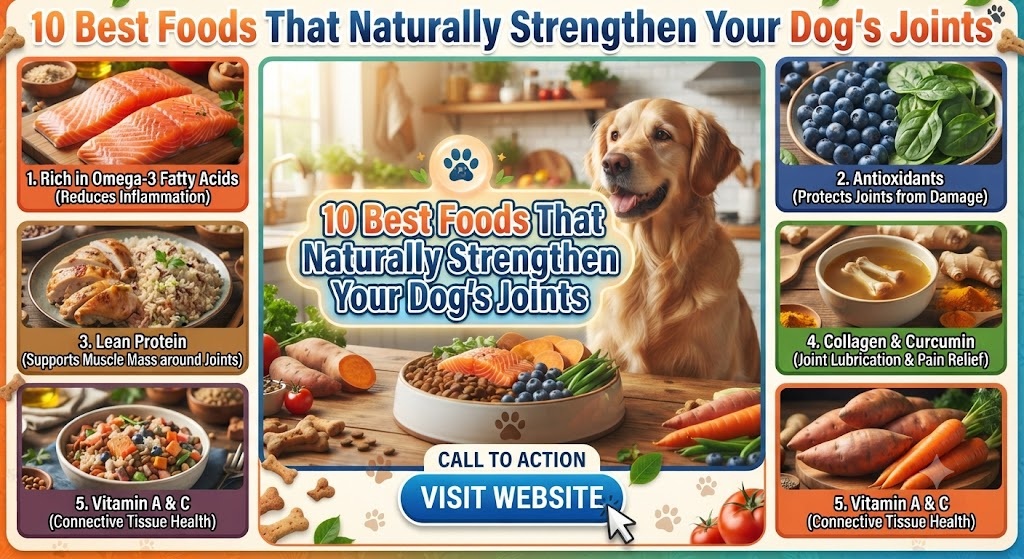
- 3. Best Foods That Strengthen Your Dog’s Joints
- Salmon
- Rich in omega-3 fatty acids
- Helps reduce inflammation
- Sardines
- Packed with healthy fats and calcium
- Supports cartilage and bone health
- Bone Broth
- Natural source of collagen and gelatin
- Helps maintain healthy cartilage
- Chicken Feet
- High in glucosamine and chondroitin
- Supports joint flexibility
- Eggs
- Excellent source of protein and collagen-building nutrients
- Lean Chicken and Turkey
- Helps maintain muscle strength around joints
- Beef
- Rich in protein, zinc, and iron
- Pumpkin
- High in antioxidants and fiber
- Helps maintain a healthy weight
- Sweet Potatoes
- Loaded with vitamins and anti-inflammatory nutrients
- Blueberries
- Powerful antioxidants that protect joint tissues
- Spinach
- Contains vitamins that support healthy bones
- Kale
- Rich in calcium and antioxidants
- Carrots
- Source of beta-carotene and vitamin A
- Turmeric (Vet-Approved Amounts Only)
- Natural anti-inflammatory properties
- Green-Lipped Mussels
- Rich in omega-3s and joint-supporting compounds
- 4. Foods That Help Reduce Joint Inflammation
- Fatty fish
- Berries
- Leafy green vegetables
- Turmeric
- Bone broth
- 5. Foods to Avoid for Better Joint Health
- High-fat processed foods
- Sugary treats
- Excessive table scraps
- Salty snacks
- Artificial preservatives
- 6. The Importance of Maintaining a Healthy Weight
- How excess weight damages joints
- Portion control tips
- Healthy treat alternatives
- 7. Joint-Friendly Feeding Tips
- Balanced diet recommendations
- Proper hydration
- Choosing quality dog food
- When to add supplements
- 8. Exercise That Supports Healthy Joints
- Daily walks
- Swimming
- Gentle stretching
- Low-impact play
- Activities to avoid
- 9. Which Dogs Need Joint-Supporting Foods the Most?
- Senior dogs
- Large breeds
- Working dogs
- Overweight dogs
- Dogs recovering from injuries
- 10. Natural Supplements That May Help
- Glucosamine
- Chondroitin
- MSM
- Fish oil
- Collagen peptides
- Green-lipped mussel supplements
- 11. Signs Your Dog’s Joint Health Is Improving
- Easier movement
- Less stiffness
- Increased activity
- Better posture
- More willingness to play
- 12. When to See a Veterinarian
- Persistent limping
- Swollen joints
- Severe pain
- Difficulty standing
- Sudden loss of mobility
- 13. Frequently Asked Questions (FAQs)
- What is the best food for dog joints?
- Can puppies benefit from joint-supporting foods?
- How long does it take to see improvements?
- Are supplements better than natural foods?
- Can diet prevent arthritis?
- 14. Final Thoughts
- Build a long-term joint health plan
- Combine proper nutrition, exercise, and regular veterinary care
- Help your dog stay active, comfortable, and mobile throughout every stage of life
3. Anti-Inflammatory Roots and Spices
Sometimes, the best medicine is found in the spice cabinet. These plants work on a cellular level to reduce the “fire” of inflammation.
Turmeric (The Golden Healer)
The active ingredient in turmeric is curcumin. Studies have shown it can be as effective as some NSAIDs (non-steroidal anti-inflammatory drugs) in reducing pain, without the side effects.
- The “Golden Paste” Recipe: To make turmeric bioavailable for dogs, you must mix it with a healthy fat (like coconut oil) and a pinch of black pepper (piperine).
Ginger
Ginger isn’t just for upset stomachs. It is a powerful circulatory stimulant.
- Benefit: By increasing blood flow to the extremities, it helps deliver nutrients to the joint tissues more efficiently.
Yucca Schidigera
Often found in high-end supplements, this desert plant contains saponins which act as natural “steroids” to reduce joint swelling.
4. Vegetables: The Cruciferous Protectors
Not all greens are created equal when it comes to bones.
Broccoli and the Sulforaphane Secret
Broccoli contains a compound called sulforaphane. Recent research suggests that sulforaphane can block the enzymes that cause joint destruction in osteoarthritis.
- Serving: Steam it lightly to make it easier for your dog to digest.
Kale and Spinach
These leafy greens are high in Vitamin C and Vitamin K. Vitamin K is essential for bone mineralization—it helps the body “glue” calcium into the bone matrix.
Celery
Celery contains a compound called 3-n-butylphthalide (3nB), which has been shown to reduce inflammatory markers in the blood. It’s also a great low-calorie snack for dogs needing to lose weight to ease joint pressure.
5. Fruits: The Antioxidant Army
Oxidative stress is a major contributor to joint aging. Antioxidants neutralize the free radicals that damage joint cells.
Blueberries
The “King of Antioxidants.” Blueberries contain anthocyanins, which protect the joints from the oxidative damage that occurs during exercise and aging.
Papaya
Papaya contains papain, an enzyme that helps break down proteins and has anti-inflammatory properties. It’s also rich in Vitamin C, which is a precursor to collagen production.
Pumpkin
While mostly known for digestion, pumpkin is loaded with beta-carotene. This precursor to Vitamin A helps maintain the health of all connective tissues.
6. The “Super Fats” for Mobility
Healthy fats aren’t just for energy; they are structural components of the body.
Coconut Oil
Medium-chain triglycerides (MCTs) in coconut oil can help reduce inflammation and are even thought to help with brain health in senior dogs.
Hemp Seed Oil
Hemp oil has a perfect 3:1 ratio of Omega-6 to Omega-3 fatty acids. It also contains Gamma-Linolenic Acid (GLA), which is a proven inflammation fighter.
7. The Naughty List: Foods That Worsen Joint Pain
To strengthen the joints, you must also stop the things that weaken them.
- Grains and Corn: High-carb diets can trigger insulin spikes, which lead to systemic inflammation.
- Processed Sugars: Often hidden in low-quality dog treats, sugar is the primary fuel for inflammation.
- Nightshades (in excess): Some holistic vets suggest avoiding potatoes, tomatoes, and peppers for dogs with severe arthritis, as they contain solanine, which may aggravate joint pain in sensitive individuals.
- High-Omega-6 Oils: Vegetable oil, soybean oil, and corn oil can actually promote inflammation if not balanced by Omega-3s.
8. Weight Management: The Most Important “Food” Rule
You can feed your dog every superfood on this list, but if they are 10 pounds overweight, their joints will still suffer.
- The Science: Fat tissue is metabolically active. It secretes hormones called adipokines that actually cause inflammation throughout the body.
- The Test: You should be able to easily feel your dog’s ribs without pressing hard, and they should have a visible “waist” when viewed from above.
9. DIY Recipes for Joint Support
Recipe 1: “Joint Jelly” Topper
- Ingredients: 2 cups Bone Broth, 2 tbsp Plain Gelatin (unflavored/unsweetened), 1 tsp Turmeric Paste.
- Directions: Warm the broth, whisk in the gelatin and turmeric. Pour into silicone molds and refrigerate. Add one “jiggle” to every meal.
Recipe 2: The “Sardine Smash”
- Ingredients: 1 tin of Sardines (in water), 1/4 cup Blueberries, 1 tsp Hemp Oil.
- Directions: Mash together and use as a high-protein, anti-inflammatory meal replacement once a week.
10. Age-Specific Joint Nutrition
For Puppies: Proactive Protection
Focus on controlled growth. Large breed puppies who grow too fast are more prone to hip dysplasia. Ensure their calcium-to-phosphorus ratio is perfectly balanced (consult your vet for specific puppy formulations).
For Adults: Maintenance
Focus on “The Big Three”: Glucosamine, Chondroitin, and Omega-3s. This is the stage to start preventative supplementation before symptoms appear.
For Seniors: Damage Control
Increase the dosage of anti-inflammatories. Senior dogs often have decreased appetite, so nutrient-dense foods like green-lipped mussels and bone broth are essential.
11. Lifestyle Tweaks to Support the Diet
Diet is the foundation, but these changes maximize the benefits of the food:
- Orthopedic Bedding: Memory foam helps distribute weight evenly, preventing “pressure point” pain.
- Consistent, Low-Impact Exercise: Swimming or walking on soft grass is better than fetching on concrete.
- Toe-Nail Trimming: Long nails change the way a dog’s foot hits the ground, which travels up the leg and misaligns the joints.
Conclusion: A Holistic Approach to Longevity
Strengthening your dog’s joints isn’t about a single “miracle” ingredient. It’s about a cumulative lifestyle shift. By replacing processed, inflammatory fillers with nutrient-dense superfoods like bone broth, oily fish, and turmeric, you are literally rebuilding your dog from the inside out.
Remember, every meal is an opportunity to heal. Your dog’s golden years don’t have to be spent on the sidelines. With the right nutrition, you can keep that tail wagging and those legs moving for years to come.
Disclaimer: Always consult with your veterinarian before introducing new foods or supplements into your dog’s diet, especially if they have pre-existing conditions or are on medication.