Dog Grooming Bible: Professional Secrets to Transform Your Pup from Scruffy to Spectacular
Dog grooming is far more than a simple vanity project or a way to ensure your furniture stays relatively hair-free. It is a fundamental pillar of canine health, a vital bonding opportunity, and a preventative measure against a host of medical issues. Whether you have a short-haired Beagle or a high-maintenance Poodle, understanding the nuances of grooming is essential for every responsible pet owner.
In this comprehensive guide, we will dive deep into the world of canine aesthetics and hygiene. We will explore the tools of the trade, the science behind different coat types, and the step-by-step techniques that professional groomers use to keep dogs looking and feeling their best.
1. The Psychology of Grooming: Why It Matters
Before we pick up a brush, we must understand the “why.” Grooming is an extension of the natural “allogrooming” behavior seen in wild canines. It’s a social activity that reinforces the bond between you and your dog.
Health Beyond the Surface
Regular grooming allows you to perform a “mini-physical” on your dog. As you brush and wash, you are checking for:
- Lumps and Bumps: Early detection of tumors or cysts.
- Parasites: Finding fleas, ticks, or mites before an infestation takes hold.
- Skin Irritations: Identifying “hot spots,” dryness, or fungal infections.
- Injury: Noticing small cuts or thorns that your dog might be hiding.
Stress Reduction
A well-groomed dog is a comfortable dog. Mats pull on the skin, causing constant low-level pain. Overgrown nails change the way a dog walks, leading to joint issues. By maintaining a grooming schedule, you remove these stressors, leading to a happier, more relaxed pet.
2. Building Your Professional-Grade Home Grooming Kit
You wouldn’t try to fix a car with a kitchen spoon; don’t try to groom your dog with human tools. Investing in high-quality equipment saves money in the long run and prevents accidental injury to your pet.
The Essential Brush Collection
Not all brushes are created equal. You need the right tool for your dog’s specific coat:
- Slicker Brushes: These have fine, short wires close together. They are the “workhorses” of grooming, perfect for removing mats and tangles in medium-to-long or curly-haired dogs.
- Pin Brushes: Similar to human hairbrushes, these are best for long-haired breeds to provide a finishing touch without pulling.
- Bristle Brushes: Best for short-haired, smooth-coated dogs. They remove loose hair and stimulate the skin to produce natural oils.
- Undercoat Rakes: Critical for “double-coated” breeds (like Huskies or Golden Retrievers). They reach through the topcoat to pull out the dead “fluff” underneath.
- Rubber Curry Combs: Excellent for short-haired breeds and for use during the bath to massage the skin and loosen dead fur.
Shears and Clippers
- Safety Shears: Look for scissors with rounded “ball” tips to prevent accidental stabs if your dog jerks.
- Electric Clippers: If you plan on doing full haircuts, invest in a quiet, professional-grade clipper with interchangeable blades (like a #10 for sanitary areas and #7 for the body).
The “Dry” Essentials
- High-Velocity Dryer: Human hair dryers are often too hot and not powerful enough. A pet-specific dryer uses air volume rather than heat to blast water out of the coat.
- Microfiber Towels: These absorb significantly more water than standard cotton towels.
3. Understanding Your Dog’s Coat Type
Different breeds require vastly different approaches. Understanding what you’re working with is the first step to success.
Smooth Coats (e.g., Boxers, Labradors)
These are the easiest to maintain but often shed the most. They require weekly brushing with a rubber curry brush and occasional baths.
Double Coats (e.g., German Shepherds, Pomeranians)
These dogs have a harsh outer coat and a soft, insulating undercoat. NEVER shave a double-coated dog. Shaving ruins their ability to regulate temperature and can lead to permanent coat damage. They need heavy de-shedding, especially during “blowout” seasons in spring and fall.
Long Coats (e.g., Shih Tzus, Afghan Hounds)
These require daily brushing to prevent mats. If a mat forms, it must be carefully teased apart, as it can quickly become a “pelt” that traps moisture against the skin, leading to infections.
Wire Coats (e.g., Terriers)
These coats feel rough to the touch. In the professional world, they are often “hand-stripped” (pulling out dead hair by the root) to maintain the texture, though many pet owners opt for clipping for convenience.
Curly/Wool Coats (e.g., Poodles, Doodles)
These coats don’t shed traditionally; instead, the dead hair gets trapped in the curls. Without daily brushing and regular professional clips, these dogs will mat down to the skin almost instantly.
4. The Master Class in Bathing
Most owners dread bath time, but with the right technique, it can be a breeze.
Prep Work is Key
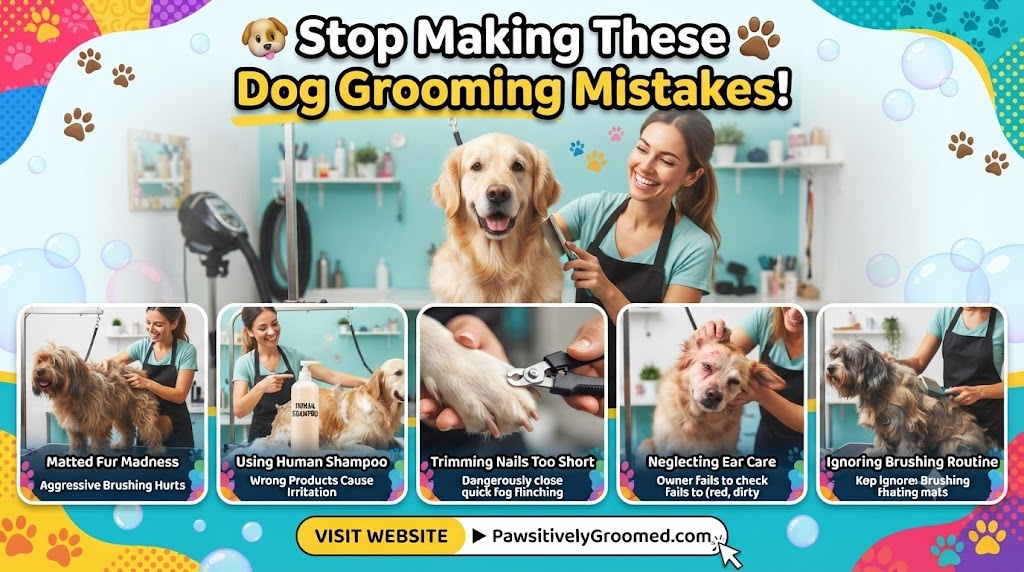
Rule Number One: Never bathe a matted dog. Water acts like glue on mats, tightening them until they are impossible to remove without shaving. Always brush your dog thoroughly before they get wet.
Temperature and Environment
- The Water: Use lukewarm water. Dogs have thinner skin than humans; what feels “comfortably hot” to you can scald them.
- Traction: Put a rubber mat or a towel in the bottom of the tub. Dogs panic when they feel they are slipping.
The Washing Process
- Saturate: Get the coat soaking wet down to the skin. This takes longer than you think, especially with thick coats.
- The Shampoo: Use a dog-specific, pH-balanced shampoo. Human shampoo is too acidic and will strip the natural oils, leading to itchy, flaky skin.
- The Two-Wash Method: The first wash removes surface dirt. The second wash actually cleans the skin and allows any medicated ingredients to work.
- Face Last: Most dogs hate water on their face. Use a washcloth for the face and ears to avoid getting soap in their eyes or water in their ear canals.
- Rinse, Rinse, Rinse: This is the most important step. Residual soap is the #1 cause of post-bath itching. Rinse until the water runs crystal clear and the fur “squeaks” between your fingers.
5. The Art of the Brush: Technique Matters
Brushing isn’t just “petting with a tool.” It requires a specific technique to be effective.
Line Brushing
This is the “gold standard” for long-haired or thick-coated dogs.
- Start at the bottom of the leg.
- Push the hair up with one hand to reveal a “line” of skin.
- Brush the hair down from that line.
- Move up an inch and repeat. This ensures you are brushing from the skin out, not just skimming the top of the fur.
Dealing with Mats
If you find a mat:
- Apply a detangling spray or a bit of cornstarch to the area.
- Hold the base of the mat (near the skin) so you don’t pull the skin.
- Use the end tooth of a comb to “pick” the mat apart from the outside in.
- If it’s too tight, use safety shears to cut into the mat (vertically, away from the skin) to break it up, then brush it out.
6. Nail Trimming: Overcoming the Fear
Nail trimming is the most stressful part of grooming for many owners, but it is vital. Long nails cause the paws to splay, leading to arthritis and skeletal issues.
Identifying the “Quick”
Inside the nail is the quick—a vein and nerve. On white nails, it’s the pink part. On black nails, it’s invisible.
- The Secret: Cut small slivers at a time. When you see a small, dark “dot” in the center of the cut surface, you are approaching the quick. Stop there.
Clippers vs. Grinders
- Guillotine Clippers: Best for small to medium dogs.
- Plier-style Clippers: Best for large dogs with thick nails.
- Dremels/Grinders: These sand the nail down. They are safer for avoiding the quick and leave a smooth edge that won’t scratch your floors.
Emergency Protocol
Always have Styptic Powder (like Kwik Stop) on hand. If you “quick” the dog, don’t panic. Apply the powder with firm pressure to stop the bleeding instantly.
7. Dental Hygiene: The Forgotten Step
Periodontal disease is the most common ailment in adult dogs. It can lead to heart, kidney, and liver issues as bacteria enters the bloodstream.
How to Brush Dog Teeth
- The Paste: Never use human toothpaste (it contains Xylitol, which is toxic, and fluorides which are harmful if swallowed). Use enzymatic dog toothpaste in flavors like poultry or beef.
- The Technique: You don’t need to brush the inside of the teeth (the tongue does most of that). Focus on the outside of the upper back molars, where plaque accumulates most.
- Frequency: Ideally daily, but even three times a week makes a massive difference.
8. Ear and Eye Maintenance
Clear Vision
Some breeds (like Poodles and Maltese) are prone to tear staining.
- Wipe the area daily with a damp cloth or specialized eye wipes.
- Keep the hair around the eyes trimmed short to prevent irritation.
- If the discharge is green or yellow, or if the eye is red, see a vet—it could be an infection.
Healthy Ears
- Smell Test: Healthy ears should not have an odor. A “yeasty” or “corn chip” smell usually indicates an infection.
- Cleaning: Use a vet-approved ear cleaner. Fill the canal, massage the base of the ear (you should hear a “squelch” sound), and then let the dog shake. Wipe the excess with a cotton ball—never use Q-tips deep in the ear canal.
9. Handling Behavioral Challenges
Not every dog loves the spa treatment. Training is just as important as the physical grooming.
Desensitization
Start young. Touch your puppy’s paws, ears, and mouth constantly. Run an electric toothbrush near them to get them used to the vibration of clippers.
The “Consent” Method
If your dog is stressed, don’t force it. Use high-value treats (like peanut butter on a Lickimat) to create positive associations. If the dog becomes truly aggressive or panicked, stop immediately and consult a professional. Safety for both you and the dog is paramount.
10. When to Call a Professional
While home grooming is great, some tasks are best left to the pros.
- Full Body Grooms: If you want a specific “breed cut” (like a Poodle Continental or a Schnauzer cut).
- Severe Matting: If a dog is matted to the skin, trying to brush it out is painful. A professional can safely shave the mats off with specialized equipment.
- Anal Gland Expression: While some owners do this at home, it’s a messy job that can lead to injury if done incorrectly.
- Aggressive Behavior: Professionals have the tools (and the experience) to handle difficult dogs safely.
11. Seasonal Grooming Considerations
Your dog’s needs change with the weather.
Summer Care
- Hydration: Always groom in a cool area.
- Paw Protection: Hot pavement can burn paw pads. Use paw balms or waxes to create a protective barrier.
- The “Summer Shave” Myth: As mentioned, don’t shave double coats. Their coat actually acts as insulation against the heat.
Winter Care
- Salt and Chemicals: Road salt can be corrosive to paws. Wash your dog’s feet after every walk.
- Drying: Never let a dog with a thick coat stay damp in the winter; they can develop “hot spots” or even hypothermia.
12. Viral Title Ideas for Your Grooming Content
If you are sharing your grooming journey on social media or a blog, use these high-CTR titles:
- “I Stopped Taking My Dog to the Groomer and Did THIS Instead (Professional Results!)”
- “10 Dangerous Grooming Mistakes That Are Hurting Your Dog (And How to Fix Them)”
- “The Secret to Stopping Dog Shedding Forever: An Expert Guide”
- “Why You Should NEVER Shave Your Husky: The Science of the Double Coat”
- “From Scruffy to Puppy Model: A Step-by-Step Grooming Transformation”
- “The $50 Grooming Kit That Saves Me $1,000 a Year”
- “How to Trim Your Dog’s Nails Without the Drama: 5 Pro Tips”
- “Is Your Dog’s Breath Stinky? The 5-Minute Dental Routine You Need”
- “7 Grooming Tools Every ‘Doodle’ Owner MUST Own to Avoid Matting”
- “The Ultimate Bathing Hack: How to Wash Your Dog Without Getting Soaked”
Conclusion: The Reward of a Well-Groomed Dog
Grooming is an investment. It’s an investment in your dog’s health, your home’s cleanliness, and the longevity of your relationship. By mastering these tips and techniques, you aren’t just making your dog “pretty”—you are ensuring they live a comfortable, pain-free life.
Remember, patience is the most important tool in your kit. Take it slow, reward often, and soon, your dog won’t just tolerate grooming—they’ll look forward to it. Whether you’re just starting out or looking to refine your skills, the journey to a perfectly groomed pup is one of the most rewarding paths a pet owner can take. Happy grooming!