The Silent Struggle: 10 Hidden Signs Your Dog Is Secretly Sick (And How to Save Their Life)
Our dogs are more than just pets; they are family members, confidants, and the purest sources of unconditional love in our lives. However, unlike a human family member who can tell you when they have a nagging headache or a dull ache in their joints, dogs possess an evolutionary instinct to hide their pain. In the wild, showing weakness meant becoming a target for predators. Even though our domesticated companions sleep on memory foam beds and eat premium kibble, that “stoic” DNA remains.
Because dogs are masters of disguise when it comes to illness, many pet parents don’t realize something is wrong until a condition has progressed to a critical stage. Being a proactive “pet detective” is essential. By the time a dog is whimpering or crying out, they are often in significant distress.
This comprehensive guide delves into the 10 subtle, often overlooked signs that your dog might be secretly sick, providing you with the knowledge needed to act before a minor issue becomes a life-threatening emergency.
1. The Subtle Shift in “The Joy of Eating”
Most dogs live for mealtime. If your Labrador—who usually acts like they haven’t eaten in three years—suddenly leaves a few kibbles behind, it’s an immediate red flag. However, changes in appetite aren’t always about refusing food.
Decreased Appetite (Anorexia or Hyporexia)
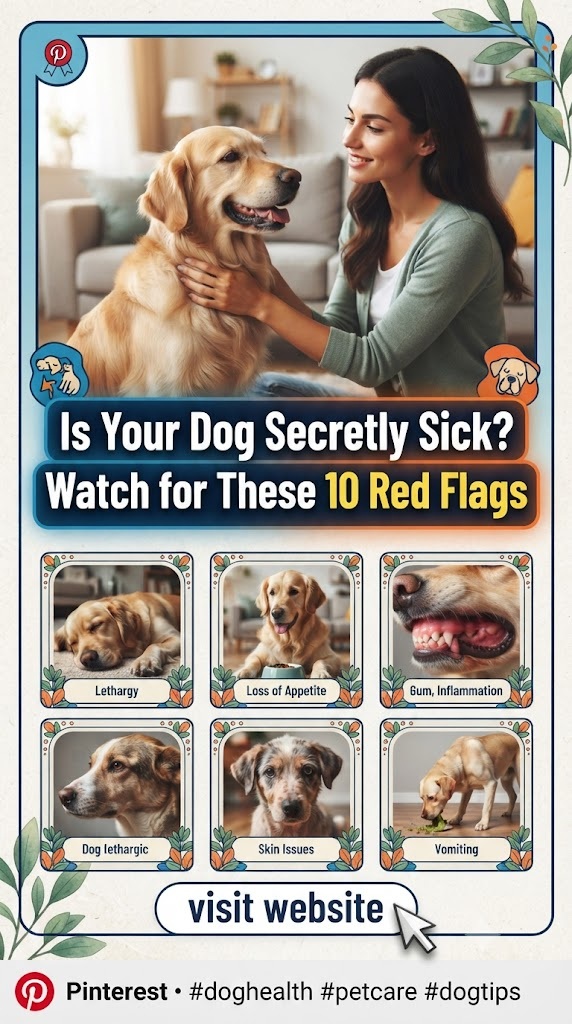
A loss of appetite is one of the most common signs of systemic illness. It can range from dental pain (making it physically difficult to chew) to more serious internal issues like kidney disease, liver failure, or cancer. Even a slight “pickiness” that lasts more than 24 hours warrants attention.
Increased Appetite (Polyphagia)
Interestingly, a dog that suddenly becomes more obsessed with food may also be sick. Conditions like Diabetes Mellitus, Cushing’s Disease (hyperadrenocorticism), or malabsorption issues (where the body isn’t processing nutrients) can cause a dog to feel constantly starved despite eating.
What to Watch For:
- The “Head Turn”: Your dog sniffs the food but turns away.
- Slow Eating: Taking significantly longer to finish a meal.
- Dropping Food: Picking up kibble and letting it fall out of the mouth (often a sign of dental disease).
2. Excessive Thirst and Frequent “Potty Breaks”
If you find yourself refilling the water bowl more than usual, or if your house-trained dog suddenly starts having accidents indoors, don’t dismiss it as a behavioral issue or “just getting older.”
Polydipsia and Polyuria (PU/PD)
Increased thirst (polydipsia) and increased urination (polyuria) are the classic “twin” symptoms of several major canine health issues. When the kidneys are struggling to filter toxins or the body is trying to flush out excess sugar, the dog will drink more to compensate.
Potential Culprits:
- Kidney Failure: The kidneys lose their ability to concentrate urine, leading to dehydration and increased thirst.
- Diabetes: High blood sugar spills into the urine, pulling water with it.
- Pyometra: In unspayed females, a life-threatening uterine infection can manifest as extreme thirst.
- Urinary Tract Infections (UTIs): The urge to go is constant, though often only small amounts are produced.
Pro Tip: Measure how much water your dog drinks in a 24-hour period. Generally, a dog should drink about 1 ounce of water per pound of body weight. If they are doubling that, see a vet.
3. The “New” Personality: Behavioral Shifts
One of the most heartbreaking signs of illness is a change in your dog’s personality. Since dogs can’t use words, they use their behavior to communicate discomfort.
Increased Irritability or Aggression
A normally sweet dog who growls when touched or snaps when you try to move them off the couch is likely in pain. Chronic pain from arthritis, spinal issues, or even an ear infection can make a dog “touch-sensitive.”
Hiding and Social Withdrawal
In the wild, a sick animal hides to stay safe. If your “velcro dog” is suddenly spending all their time under the bed, in the back of a closet, or in a room where the family doesn’t gather, they are likely feeling very unwell.
Clinginess and Anxiety
Conversely, some dogs become hyper-attached when they feel vulnerable. If your independent dog is suddenly pacing, whining, or refusing to leave your side, they may be experiencing internal distress or neurological changes.
4. More Than Just “Dog Breath”: Oral Red Flags
We often joke about “dog breath,” but the truth is that a healthy dog’s breath shouldn’t be offensive. Oral health is a window into the rest of the body.
Foul Odor
A putrid or rotting smell usually indicates periodontal disease, which is more than just “bad teeth.” Bacteria from the mouth can enter the bloodstream and cause permanent damage to the heart, liver, and kidneys.
Discolored Gums
Healthy gums should be “bubblegum pink.”
- Pale or White Gums: Can indicate anemia, internal bleeding, or shock.
- Deep Red/Purple Gums: Can indicate heatstroke, toxin exposure, or severe inflammation.
- Blue/Tinted Gums (Cyanosis): A dire emergency indicating a lack of oxygen.
- Yellow Gums (Jaundice): A sign of liver failure or the destruction of red blood cells.
5. Changes in the “Windows to the Soul”: The Eyes
A dog’s eyes should be clear, bright, and free of discharge. Any change in the appearance of the eye is often a sign of either a localized infection or a systemic problem.
Cloudiness
While some cloudiness (nuclear sclerosis) is normal in aging dogs, sudden cloudiness can indicate cataracts or glaucoma. Glaucoma is incredibly painful and can lead to permanent blindness within hours if the pressure isn’t reduced.
Redness and Discharge
Yellow or green discharge usually signals infection. However, squinting (blepharospasm) is almost always a sign of pain. If your dog is keeping one eye partially closed, they may have a corneal ulcer or a foreign object stuck under the eyelid.
The Third Eyelid
Dogs have a “nictitating membrane” or third eyelid. If this becomes visible and stays up, covering part of the eye, it’s a sign that the dog is either in pain, dehydrated, or suffering from a neurological condition like Horner’s Syndrome.
6. Altered Sleep Patterns and Restlessness
Dogs sleep a lot—anywhere from 12 to 14 hours a day on average. However, it’s the quality and timing of that sleep that matters.
Excessive Lethargy
There is a difference between a sleepy dog and a lethargic dog. A sleepy dog will jump up for a walk or a treat. A lethargic dog is reluctant to move, seems “heavy,” and shows little interest in things they usually love. This “sluggishness” is a common symptom of everything from heart disease to hypothyroidism.
Nighttime Restlessness
If your dog is pacing at night, panting, or unable to get comfortable, they may be suffering from “Orthopnea.” This is often seen in dogs with congestive heart failure; when they lie down, fluid in their chest makes it difficult to breathe, so they stand or pace to keep their airways clear.
Cognitive Dysfunction
In older dogs, pacing and “sundowning” (becoming confused at night) can be signs of Canine Cognitive Dysfunction, which is similar to Alzheimer’s in humans.
7. The “Scoop on Poop”: Digestive Disruptions
It isn’t the most glamorous part of pet ownership, but monitoring your dog’s bathroom habits is one of the best ways to catch illness early.
Consistency and Color
- Black/Tarry Stool (Melena): This indicates digested blood, usually from the stomach or upper small intestine. This is a medical emergency.
- Bright Red Blood (Hematochezia): Indicates bleeding in the lower intestinal tract or colon.
- Grey/Greasy Stool: Can indicate issues with the pancreas (Exocrine Pancreatic Insufficiency).
Straining
If your dog is straining to go, it could be simple constipation, or it could be something more sinister like a tumor in the colon or, in male dogs, an enlarged prostate. If a dog is straining to urinate and nothing is coming out, this is a life-threatening emergency, especially in males, as it could indicate a blockage.
8. Stiff Movements and the “Getting Old” Myth
Many owners dismiss a dog’s slowing down as “just part of getting old.” While aging does bring changes, pain is not a requirement of aging.
Subtle Limping or “Bunny Hopping”
If your dog starts taking the stairs one at a time or “bunny hops” (moving both back legs together) while running, they are likely dealing with hip dysplasia or arthritis.
Difficulty Rising
A dog that struggles to get up after a nap but “warms up” after walking may have chronic inflammation. Conversely, a dog that is suddenly weak in the hind end or “knuckling” (walking on the tops of their paws) may have a neurological issue like Intervertebral Disc Disease (IVDD).
Reluctance to Jump
If your dog used to love jumping onto the bed but now waits for you to lift them, they are communicating that the impact is too painful for their joints or spine.
9. Weight Fluctuations: The Silent Gain and Loss
Weight changes are often so gradual that we don’t notice them until they are significant. This is why “hands-on” checks are vital.
Unexplained Weight Loss
If your dog is eating normally but losing weight, it could be a sign of cancer, metabolic disease, or high-load parasite infections. Cancer cells consume a massive amount of energy, “stealing” the calories your dog eats.
Sudden Weight Gain or Bloating
A “pot-bellied” appearance in a dog that hasn’t increased its food intake can be a sign of Cushing’s Disease. However, if the abdomen feels hard and the dog is trying to vomit without success, this is GDV (Bloat)—a condition where the stomach flips. You have minutes, not hours, to get to a vet.
Fluid Accumulation (Ascites)
A distended belly can also be caused by fluid buildup due to heart failure or liver disease. The dog may look “fat,” but their ribs and spine might actually be prominent—a condition known as “muscle wasting.”
10. The “Yeasty” Odor and Skin Changes
Your dog’s skin and coat are a direct reflection of their internal health. The skin is the body’s largest organ, and it’s often the first to react to internal stress.
Changing Coat Texture
A dull, brittle, or “moth-eaten” coat can indicate nutritional deficiencies or endocrine disorders like Hypothyroidism. If the hair isn’t growing back after being clipped, the thyroid is often the culprit.
Unusual Odors
If your dog smells like corn chips or old socks, they likely have a yeast infection. While this is often a skin issue, it is frequently triggered by underlying allergies or an immune system that is struggling.
Lumps and Bumps
While many lumps are “lipomas” (fatty tumors), you cannot tell if a lump is cancerous just by feeling it. Every new lump should be “Fine Needle Aspirated” by a vet. A small, innocent-looking bump could be a Mast Cell Tumor, which is highly aggressive.
The “Wait and See” Trap: Why Early Intervention Matters
The most dangerous phrase in pet ownership is “Let’s just see how he feels tomorrow.” Because dogs hide their symptoms so well, by the time you notice the sign, the dog has likely been feeling poorly for quite some time.
The Cost Factor
Early intervention is not only better for the dog; it’s better for your wallet. Treating a urinary tract infection with a simple round of antibiotics is significantly cheaper than treating a dog for kidney failure after the infection has traveled upward.
Quality of Life
Modern veterinary medicine offers incredible options for pain management and chronic disease control. A dog diagnosed early with heart disease can live for several more happy years on medication. A dog diagnosed in the final stages of heart failure may only have days.
How to Perform a Weekly “At-Home Health Check”
To catch these 10 signs early, you should perform a “nose-to-tail” exam on your dog once a week. Make it a positive experience with plenty of treats.
- Nose: Check for crustiness or unusual discharge.
- Mouth: Lift the lips. Look for red gums or broken teeth.
- Eyes: Ensure they are clear and both pupils are the same size.
- Ears: Smell them! They should not smell like yeast or vinegar. Look for redness.
- Skin: Run your hands over the entire body, feeling for new lumps, heat, or swelling.
- Weight: You should be able to feel (but not see) the ribs.
- Mobility: Watch your dog walk on a hard surface. Listen for the “clicking” of nails, which can indicate an uneven gait.
Conclusion: You are Your Dog’s Advocate
Your dog cannot book a doctor’s appointment. They cannot describe the “pins and needles” in their paws or the nausea in their stomach. They rely entirely on your powers of observation.
If your “gut feeling” tells you something is off, even if you can’t put your finger on exactly what it is, trust that intuition. You know your dog better than anyone else in the world. Being “overly cautious” might result in a “boring” vet visit where everything is fine—and that is the best-case scenario. But being observant and acting quickly on these ten signs is the difference between a minor hiccup and a tragic loss.
Keep your eyes sharp, your heart open, and your vet’s number on speed dial. Your best friend’s life depends on it.